If you use texting, Snapchat, WhatsApp, or Instagram, you may have seen someone write “WRU”.
You may wonder:
What does WRU mean in text?
Is it rude?
When should I use it?
In this complete guide, you will learn:
- The clear meaning of WRU
- Where it came from
- Real-life examples with short dialogues
- When to use it (and when not to)
- Common mistakes
- Modern 2026 texting trends
- Helpful FAQs
Everything is written in very simple English so anyone can understand.
Let’s begin.
What Does WRU Mean in Text?
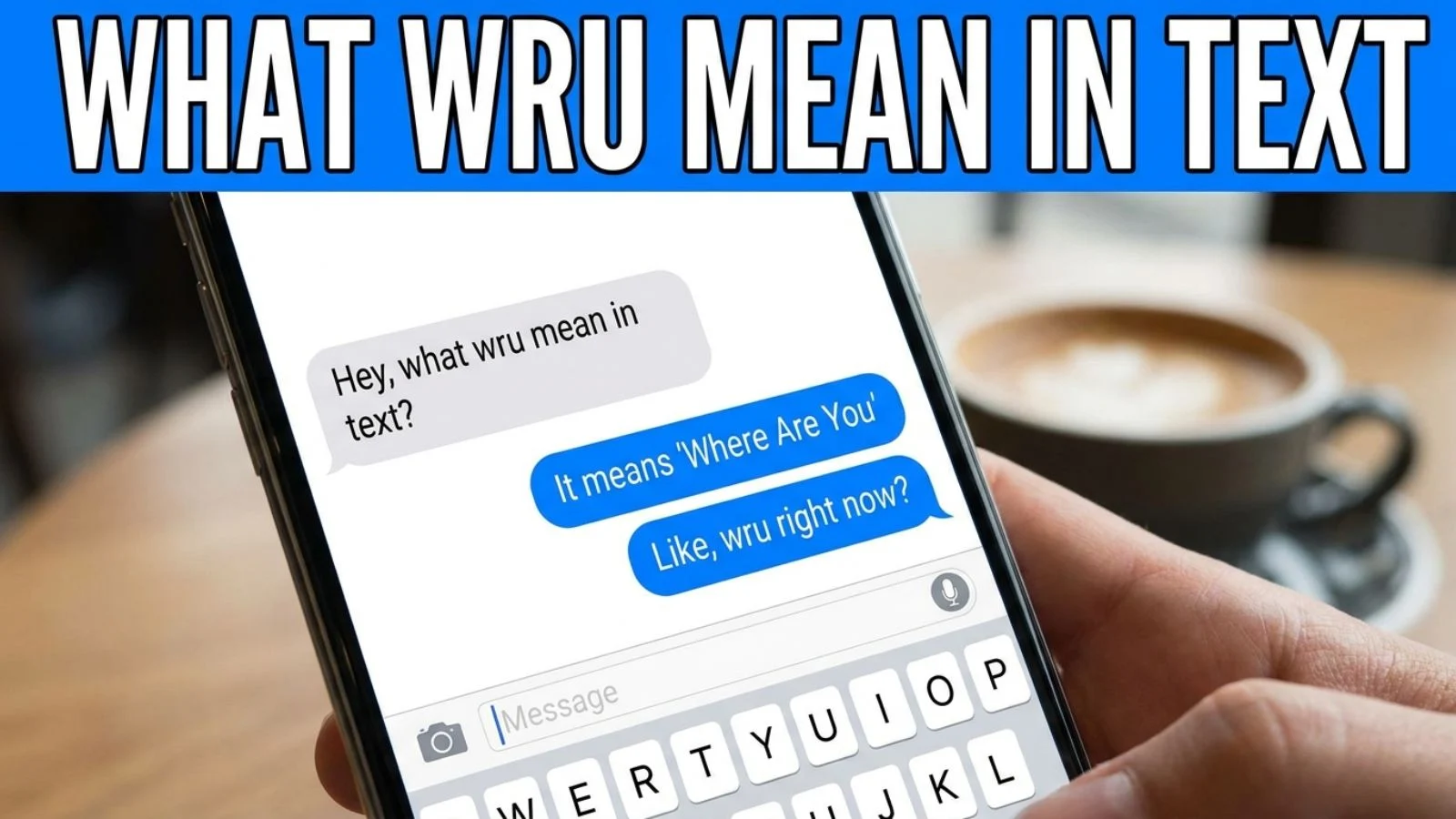
WRU means:
“Where are you?”
It is a short form used in texting and online chat.
People use WRU when they want to know someone’s location.
Simple Definition
WRU = Where are you?
It is an abbreviation.
It saves time when typing.
Why Do People Use WRU?
People use WRU because:
- It is short
- It is fast to type
- It sounds casual
- It fits texting style
In today’s fast digital world (2026), people prefer short forms.
Typing “Where are you?” takes longer.
Typing “WRU” takes only three letters.
How to Break Down WRU
Let’s look at each letter:
| Letter | Word | Meaning |
|---|---|---|
| W | Where | A place |
| R | Are | A verb |
| U | You | The person |
Together:
W + R + U = Where are you?
This is called a text abbreviation.
Origin and History of WRU
WRU started in the early days of:
- SMS texting (2000s)
- Chat rooms
- Online gaming
- MSN Messenger
- Early Facebook messages
In early mobile phones:
- Text messages had character limits.
- Typing was slow.
- Phones had small keyboards.
People began shortening words:
- You → U
- Are → R
- Before → B4
- See you → CU
So “Where are you?” became WRU.
By 2010–2020, it became common on:
- Snapchat
- TikTok comments
In 2026, it is still used, especially by teens and young adults.
Is WRU Formal or Informal?
WRU is informal.
That means:
- It is okay for friends.
- It is not okay for school essays.
- It is not okay for job emails.
Where You Should NOT Use WRU
Do NOT use WRU in:
- Job interviews
- Professional emails
- Official letters
- School assignments
Example (Wrong):
“Dear Sir, WRU right now?”
This looks unprofessional.
Instead write:
“Dear Sir, may I ask where you are currently located?”
Real-Life Examples of WRU in Text
Let’s look at simple examples.
Example 1: Meeting a Friend
A: Hey, I’m outside the mall. WRU?
B: I’m in the parking area.
Explanation:
Person A wants to know the friend’s location.
Example 2: At a Party
A: The music started! WRU?
B: I’m near the stage.
Explanation:
The person is checking where their friend is inside the event.
Example 3: Late Arrival
Mom: You said you’d be home at 6. WRU?
Son: I’m stuck in traffic.
Explanation:
The mother is asking about her child’s location.
Example 4: Online Gaming
Player 1: Enemy is here! WRU?
Player 2: I’m near the tower.
Explanation:
They are asking location inside the game.
Example 5: Romantic Context
Partner: I miss you. WRU?
Partner: At work. Thinking of you.
Explanation:
Here WRU shows care and interest.
Short Dialogues with Clear Explanation
Dialogue 1 – Casual
A: WRU?
B: At home.
Explanation:
Very simple. Just asking location.
Dialogue 2 – Concerned Tone
A: It’s late. WRU?
B: Almost home.
Explanation:
Tone shows care or worry.
Dialogue 3 – Excited Tone
A: I just arrived! WRU??
B: Right behind you!
Explanation:
Extra question marks show excitement.
Personality Traits Linked to WRU Users
The way someone uses WRU can show personality.
1. Direct Personality
People who say “WRU?” are often:
- Straight to the point
- Practical
- Not dramatic
They ask what they need.
2. Casual Communicators
WRU users usually:
- Like short messages
- Don’t write long texts
- Prefer fast conversations
3. Social & Active People
People often use WRU when:
- Meeting friends
- Hanging out
- Traveling
It shows they are socially active.
Different Ways WRU Is Used in 2026
In 2026, WRU appears in:
- Instagram DMs
- Snapchat streak chats
- WhatsApp groups
- TikTok live chats
- Online games
Modern 2026 Style Examples
- WRU rn?
(Where are you right now?) - WRU at?
(Extra casual version.) - WRUUU
(Playful spelling.) - WRU bro?
(Friendly tone.) - WRU babe?
(Romantic tone.)
WRU vs Full Sentence: Which Is Better?
Let’s compare:
| WRU | Where are you? |
|---|---|
| Informal | Can be formal |
| Fast typing | Proper grammar |
| Casual tone | Polite tone |
| Good for friends | Good for work |
Use the right one for the situation.
When WRU Can Sound Rude
Sometimes WRU may sound rude if:
- You don’t say hello first.
- You sound demanding.
- You text it many times.
Example:
WRU???
WRU??
WRU!!!
This may feel aggressive.
Better version:
Hey, WRU? Just checking.
Common Mistakes About WRU
Many people misunderstand WRU.
Mistake 1: Thinking It Means “Who are you?”
No.
WRU means Where are you?
“Who are you?” is different.
Mistake 2: Using It in Professional Emails
Wrong example:
Dear Manager, WRU for the meeting?
Correct:
Dear Manager, may I know where you are for the meeting?
Mistake 3: Using It With Strangers
WRU may feel too personal if you do not know someone well.
Location is private information.
Safety Reminder About Sharing Location
When someone asks WRU:
Think before answering.
Ask yourself:
- Do I trust this person?
- Is it safe to share my location?
In 2026, online safety is very important.
Never share:
- Your home address
- School location
- Real-time location with strangers
Similar Text Abbreviations Like WRU
Here are other common short forms:
| Abbreviation | Meaning |
|---|---|
| WYD | What are you doing? |
| WYA | Where you at? |
| HBU | How about you? |
| BRB | Be right back |
| IDK | I don’t know |
| IMO | In my opinion |
These are part of internet slang.
WRU vs WYA: What’s the Difference?
Both ask about location.
But there is a small difference.
WRU = Where are you?
WYA = Where you at?
WYA sounds more casual and slang-heavy.
WRU is slightly clearer.
Emotional Meaning Behind WRU
WRU can show different feelings.
1. Excitement
WRU?? I’m here!
Shows happiness.
2. Concern
It’s late. WRU?
Shows care.
3. Impatience
WRU??? We’re waiting.
Shows frustration.
Tone depends on context.
WRU in Relationships
In friendships:
- It shows coordination.
- It helps meeting up.
In romantic relationships:
- It shows interest.
- It shows missing someone.
Example:
WRU? I want to see you.
This shows emotional connection.
How Teens Use WRU in 2026
Teens often combine WRU with:
- Emojis
- Voice notes
- Location pins
- Snap maps
Example:
WRU? Drop location.
They may send it in group chats before meeting.
How Adults Use WRU
Adults use WRU mostly for:
- Meeting coordination
- Checking family location
- Travel plans
Example:
Flight landed. WRU?
WRU in Pop Culture and Social Media
Short text forms like WRU became popular because of:
- Fast messaging apps
- Social media trends
- Meme culture
People prefer speed and simplicity.
Short words feel modern.
Should You Use WRU?
Ask yourself:
- Is this a casual chat?
- Is the person my friend?
- Is this a quick message?
If yes, WRU is fine.
If not, use full sentence.
WRU for English Learners
If you are learning English:
Know the difference between:
- Formal English
- Informal English
WRU is informal spoken-style English in text.
It is not correct grammar for writing exams.
Quick Summary Table
| Question | Answer |
|---|---|
| What does WRU mean? | Where are you? |
| Is it formal? | No |
| Who uses it? | Friends, teens, casual chats |
| Is it rude? | Not usually |
| Safe to answer strangers? | Be careful |
Frequently Asked Questions
1. What does WRU mean in texting?
WRU means Where are you?
It asks about someone’s location.
2. Is WRU rude?
No, it is not rude.
But tone and context matter.
3. Can I use WRU in school email?
No.
Use full sentence instead.
4. What is the difference between WRU and WYA?
Both ask location.
WYA is more slang.
5. Why do people shorten “you” to “U”?
It saves time.
It started in early SMS texting.
6. Is WRU still used in 2026?
Yes.
It is still popular in casual chats.
Conclusion
Now you know the full answer to the question: What wru mean in text?
WRU simply means “Where are you?” It is a short, casual way to ask about someone’s location. It began in early texting days and is still popular in 2026. You should use WRU only in informal chats with friends, family, or people you know well. Avoid using it in professional or school writing. Always think about safety before sharing your location. Understanding simple abbreviations like WRU helps you communicate better in today’s digital world. Keep learning modern English to stay confident and connected.