If you have seen someone type “tut” in a message, you may wonder what it means.
Is it an abbreviation?
Is it a slang word?
Is it rude?
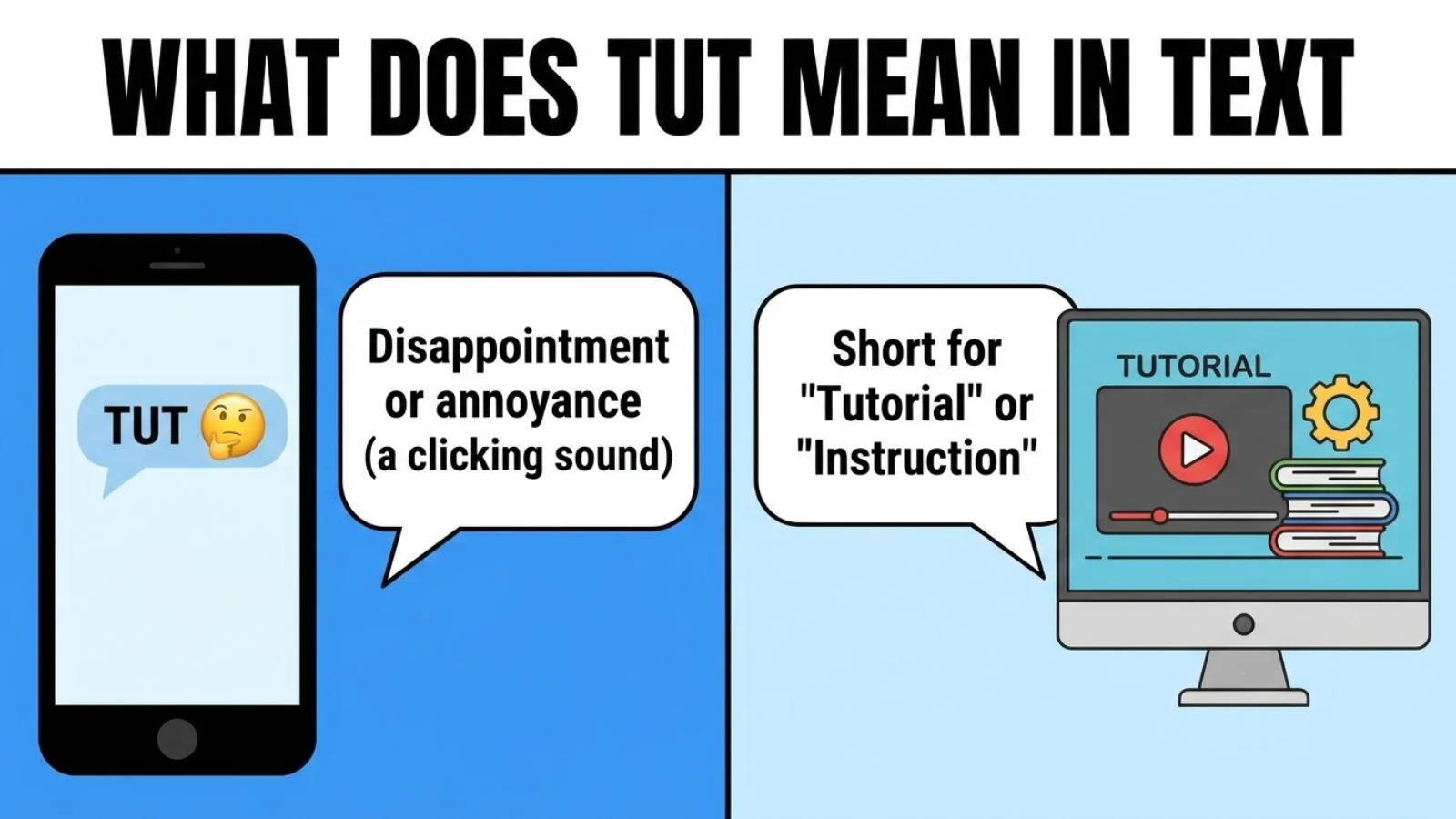
In simple words, “tut” is a sound people make to show mild disapproval, annoyance, or disappointment.
It is not usually an acronym. It is a written form of a small sound.
In text messages, social media, or online chats, “tut” shows that someone is slightly annoyed or not impressed — but not very angry.
Let’s explore this word in a clear and easy way.
Simple Meaning of “TUT” in Text
TUT means:
A short sound that shows mild annoyance, disapproval, or frustration.
It is like making a small clicking sound with your tongue.
When someone types “tut”, they are often saying:
- “That’s not good.”
- “I’m not happy about that.”
- “You should know better.”
But it is usually light and playful.
Is TUT an Acronym?
No.
TUT is not an acronym.
It does not stand for words like LOL or BRB.
It is an example of an onomatopoeia.
What Is Onomatopoeia?
An onomatopoeia is a word that sounds like the sound it describes.
Examples:
- “Buzz”
- “Clap”
- “Bang”
- “Tut”
So when someone writes “tut,” they are writing the sound itself.
Origin and History of “TUT”
The word “tut” is old. It has been used in English for many years.
Early Use
- It appeared in English writing as early as the 15th century.
- It was used to show mild scolding or annoyance.
- It copied the sound made with the tongue.
In old books, you may see it written as:
- “Tut, tut!”
- “Tut!”
Writers used it in stories when a character felt disappointed.
Classic Usage Example
In many classic British novels, characters say:
“Tut, tut! That won’t do.”
This shows polite but firm disapproval.
Even today, the meaning is almost the same.
How “TUT” Is Used in Text Messages (2026 Update)
In 2026, “tut” is used mostly in:
- Casual chats
- Social media comments
- Playful arguments
- Sarcastic replies
- British-style humor
It is more common in British English than American English.
Main Meanings of TUT in Text
Here are the main ways people use it today:
1. Mild Disapproval
This is the most common meaning.
Example:
“You forgot again? Tut.”
Meaning: I am slightly disappointed.
2. Playful Scolding
Sometimes it is joking.
Example:
“Eating cake at midnight? Tut tut!”
Meaning: I am teasing you.
3. Sarcastic Response
It can show sarcasm.
Example:
“Oh, you didn’t study? Tut.”
Meaning: You should have studied.
4. Light Frustration
It can show small frustration.
Example:
“The WiFi stopped again. Tut.”
Meaning: This is annoying.
Real-Life Text Examples With Explanation
Let’s look at short dialogues.
Example 1: Friends Chatting
A: “I forgot your birthday.”
B: “Tut tut. I expected better.”
Explanation: B feels slightly hurt but is not very angry.
Example 2: Student and Teacher
Teacher: “You did not finish homework?”
Student: “Sorry.”
Teacher: “Tut. Please complete it tomorrow.”
Explanation: The teacher shows mild disapproval.
Example 3: Social Media Comment
Post: “I skipped leg day again.”
Comment: “Tut tut.”
Explanation: The person is joking about bad habits.
Example 4: Family Conversation
Mom: “You didn’t clean your room.”
Child: “Oops.”
Mom: “Tut.”
Explanation: The mom is annoyed but calm.
Personality Traits of People Who Use “TUT”
People who use “tut” often:
- Like polite correction
- Avoid harsh language
- Prefer subtle humor
- Enjoy classic expressions
- May have British influence
It is usually not used by very aggressive people.
It fits calm personalities.
Tone and Context Matter
The meaning of “tut” changes with tone.
Since text has no voice, context is important.
Look at:
- The situation
- The relationship
- The sentence around it
For example:
“TUT” in capital letters can seem stronger.
Example:
“TUT. That was careless.”
This feels more serious.
Differences Between “Tut” and Similar Expressions
Here is a simple comparison table:
| Word | Meaning | Strength Level |
|---|---|---|
| Tut | Mild disapproval | Low |
| Ugh | Disgust or frustration | Medium |
| Tsk | Similar to tut | Low |
| Wow | Surprise (positive or negative) | Varies |
| Seriously? | Strong disbelief | Medium to High |
Tut is softer than most of these.
Modern 2026 Usage on Social Media
In 2026, people use “tut” in:
- Instagram comments
- TikTok replies
- X (Twitter) conversations
- WhatsApp chats
- Gaming chats
Example:
Influencer: “I woke up at 2 PM again.”
Follower: “Tut tut, lazy day?”
Explanation: Playful teasing.
When NOT to Use “TUT”
Avoid using “tut” when:
- The situation is serious
- Someone is upset
- You are talking to your boss
- It may sound sarcastic
- Cultural understanding is unclear
It can sound rude if misunderstood.
Common Mistakes and Misconceptions
Mistake 1: Thinking It Is an Acronym
Wrong: “TUT means ‘Take Ur Time.’”
Correct: It is a sound word.
Mistake 2: Using It in Serious Situations
Wrong:
“You lost your job? Tut.”
This feels insensitive.
Mistake 3: Overusing It
Using it too much can sound fake or dramatic.
Mistake 4: Writing It as “TUTT”
Correct spelling: Tut or Tut tut
Cultural Differences
In British English
- Very common
- Sounds natural
- Often playful
In American English
- Less common
- May sound formal or old-fashioned
In Other Countries
- May be misunderstood
- Some may think it is a typo
Formal vs Informal Use
| Situation | Can You Use “Tut”? |
|---|---|
| Texting friends | Yes |
| Family chat | Yes |
| Work email | No |
| School essay | No |
| Social media joke | Yes |
It is informal language.
Emotional Level of “Tut”
The emotional strength is low.
Scale:
- 1 = Calm
- 5 = Angry
“TUT” is around 2.
It shows:
- Small disappointment
- Gentle correction
- Soft teasing
Grammar and Sentence Placement
“TUT” can be:
1. A Single Word
“Tut.”
2. Repeated
“Tut tut.”
3. At the Beginning
“Tut, that’s not right.”
4. At the End
“You forgot again, tut.”
Can “TUT” Be Positive?
Rarely.
But sometimes it can be playful in a sweet way.
Example:
“Tut tut, you’re too kind.”
Meaning: Friendly teasing.
Similar Words to TUT
- Tsk
- Hmm
- Oh dear
- Shame
- Really?
All show mild reaction.
Why People Still Use “TUT” in 2026
Even though slang changes fast, “tut” stays because:
- It is short
- It is expressive
- It feels classic
- It avoids rude language
- It adds personality to text
It is subtle but powerful.
Quick Summary Table
| Question | Answer |
|---|---|
| Is TUT slang? | Not exactly, it is a sound word |
| Is it rude? | Not usually |
| Is it an acronym? | No |
| Strong emotion? | No, mild |
| Common in 2026? | Yes, especially online |
Frequently Asked Questions
1. What does TUT mean in text from a girl?
It usually means mild annoyance or playful teasing. It is often light and not serious.
2. Is TUT rude?
Not normally. It is soft disapproval. But tone matters.
3. What is the difference between TUT and TSK?
They are almost the same. Both show mild disapproval. “Tsk” may sound slightly sharper.
4. Why do British people say TUT?
It is traditional in British English. It has been used for centuries.
5. Can I use TUT in professional emails?
No. It is informal and may sound disrespectful.
6. Does TUT mean “Take Ur Time”?
No. That is incorrect. It is not an abbreviation.
Final Thoughts on What Does TUT Mean in Text
Now you clearly understand what “tut” means in text.
It is a small word. But it carries emotion.
It shows mild annoyance.
It shows gentle teasing.
It shows soft disappointment.
It is not rude. It is not strong. It is subtle.
In 2026, it is still used in friendly chats and social media. But context is very important. Use it with people who understand your tone. Avoid it in serious talks.
Language changes fast. Small words like “tut” remind us how simple sounds can express feelings.
If you enjoy learning text meanings and modern slang, keep exploring. Understanding digital language helps you communicate clearly and confidently every day.