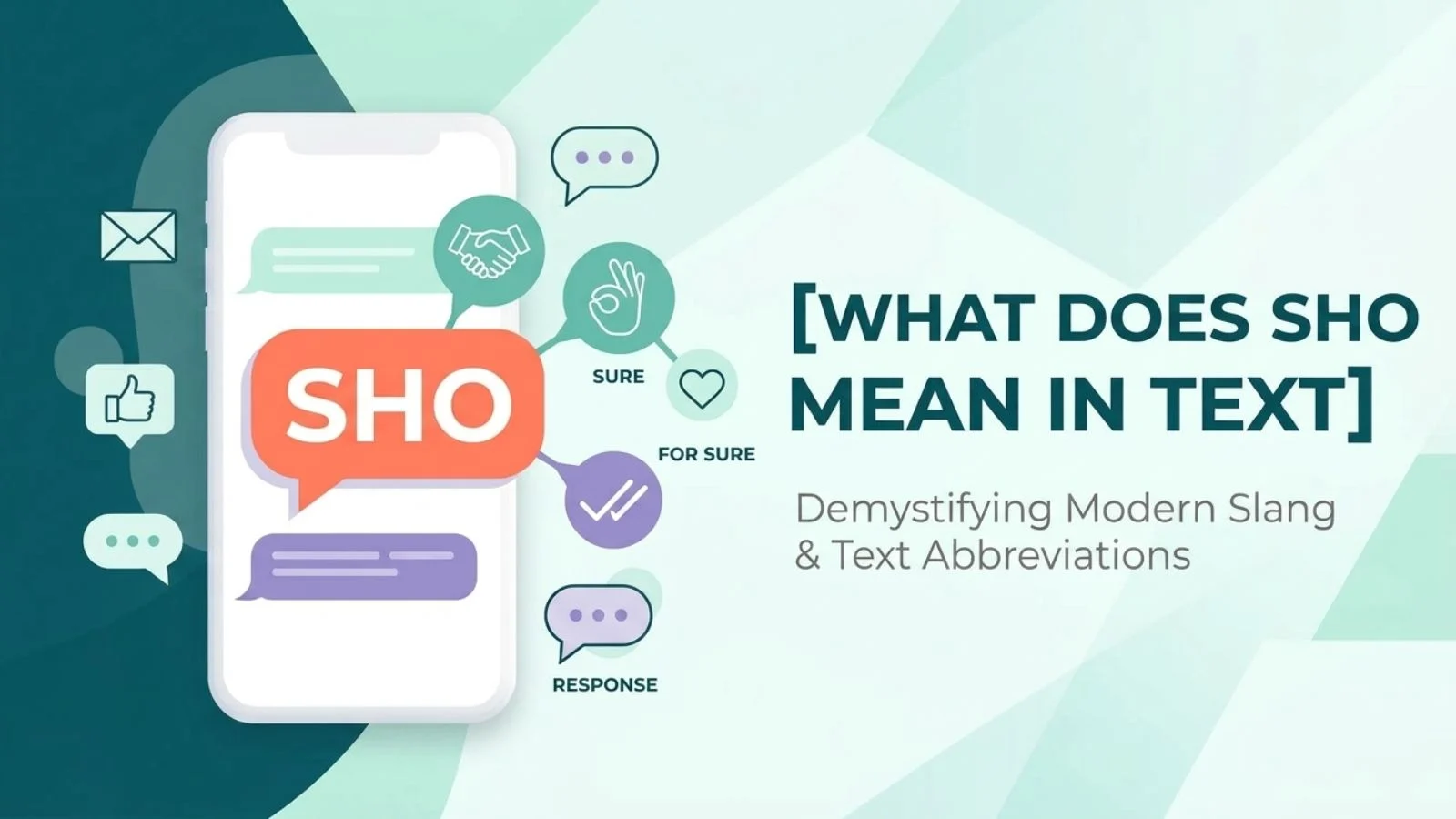
If someone texts you “sho,” they are usually saying “sure.” It is a casual slang spelling used to show agreement, confirmation, or willingness. For example, if a friend asks, “You coming tonight?” and you reply, “Sho,” you are basically saying, “Sure” or “Yes, I will.”
The word can also appear in phrases such as “fo sho,” “fosho,” or “sho you right.” The exact meaning can change slightly depending on the sentence and tone.
This guide explains what sho means in text, where it comes from, how people use it, and how you can reply naturally.
What Does Sho Mean in Text?
In texting and online conversations, “sho” usually means “sure.”
It is an informal spelling that represents the way “sure” may sound in casual speech. It is not normally an acronym with a separate meaning. Slang references commonly define “sho” as sure and describe it as an affirmative response.
Depending on the conversation, sho can mean:
- Sure
- Yes
- Okay
- Definitely
- Of course
- I agree
- I’m willing to
Simple Example
Person 1: Wanna grab lunch later?
Person 2: Sho.
Here, “sho” means “sure” or “yes, I’d like to.”
The tone is usually relaxed and friendly.
Sho Meaning in Simple Words
The easiest way to understand sho is:
Sho = Sure = Yes / Okay / Definitely
It is mostly used in casual texting, social media, chats, comments, and conversations between friends.
For example:
“Can you help me later?”
“Sho.”
This means:
“Sure, I can help you.”
Another example:
“You coming to the party?”
“Sho, I’ll be there.”
Here, sho means the person agrees to come.
The spelling is informal, so you would normally avoid it in formal emails, school assignments, job applications, or professional documents.
Where Did Sho Come From?
The history of sho is connected to informal pronunciation and spelling rather than a modern acronym.
English has a long history of writing words in ways that represent how they sound in speech. Sho is one example of this process because it represents a casual pronunciation of sure. Wiktionary identifies sho as a pronunciation spelling of sure associated with Southern U.S. and African-American Vernacular English.
The spelling has also appeared in older expressions and popular culture. One familiar example is “sho’nuff,” an informal spelling of “sure enough.”
Over time, informal spellings like sho, fo sho, and fosho became recognizable in casual speech, music, online conversations, and texting.
Is Sho a New Gen Z Word?
Not exactly.
Although people may see sho in modern social media conversations, the spelling is older than today’s Gen Z internet culture. Its use comes from informal spoken language and pronunciation.
Modern texting has simply made short, casual spellings easier to spread.
What Does Sho Mean on Social Media?
On social media, sho generally carries the same basic meaning: sure, yes, or definitely.
You may see it in comments, direct messages, captions, or replies.
For example:
Friend: “You better come with us tonight.”
You: “Sho.”
The reply shows that you agree.
Another example:
Comment: “This song is fire.”
Reply: “Sho.”
In this context, the meaning may be closer to “For sure” or “Definitely.”
However, social media slang is highly dependent on context. A short word can sometimes have several meanings, so the surrounding message matters.
How Is Sho Used in Texting?
People use sho in several common ways.
1. To Say Yes
One of the most common uses is simply saying yes.
Example:
Friend: “Want to watch a movie?”
You: “Sho.”
This means “Yes, I want to.”
2. To Say Sure
Someone may use sho when agreeing to a request.
Example:
Person 1: “Can you send me the notes?”
Person 2: “Sho, I’ll send them.”
Here, sho means “Sure.”
3. To Confirm Plans
It can also confirm that someone agrees with a plan.
Example:
Friend: “Meet me at 7?”
You: “Sho.”
The person is confirming that 7 o’clock works for them.
4. To Show Agreement
Sho can show that you agree with what someone has said.
Example:
Friend: “We should leave early.”
You: “Sho, that’s better.”
Here, sho means “Yes, I agree.”
5. To Sound Casual
Sometimes the main purpose is simply to make the conversation sound relaxed.
Compare:
“Sure, I can come.”
with:
“Sho, I can come.”
The second version sounds more informal and conversational.
What Does “Fo Sho” Mean?
“Fo sho” is a casual slang form of “for sure.”
It can mean:
- Definitely
- Absolutely
- Without a doubt
- Yes
- I agree
Example:
Friend: “You coming tomorrow?”
You: “Fo sho.”
This means “Definitely, I’m coming.”
The phrase is closely connected to the informal spelling sho. Slang references describe fo sho and fosho as forms meaning “for sure.”
Sho vs. Fo Sho
| Term | Meaning | Tone |
|---|---|---|
| Sho | Sure / Yes | Casual |
| Fo sho | For sure / Definitely | Very casual |
| Fosho | For sure | Casual/slang |
| Sure | Yes / Okay | Normal |
| Definitely | Without doubt | Stronger and more standard |
Example:
“Are you coming?”
- Sho = Sure.
- Fo sho = Definitely.
- Sure = Yes.
- Definitely = Absolutely.
Sho in Real-Life Text Conversations
Understanding examples makes slang much easier.
Example 1: Making Plans
Alex: “Wanna go out after work?”
Sam: “Sho.”
Alex: “Cool. I’ll text you when I’m done.”
Explanation: Sam is agreeing to go out. Here, sho means sure or yes.
Example 2: Asking for Help
Mia: “Can you help me with this later?”
Liam: “Sho, no problem.”
Explanation: Liam is saying that he is willing to help.
Example 3: Confirming a Time
A: “I’ll meet you at 6.”
B: “Sho.”
Explanation: B is accepting the suggested time.
Example 4: Agreeing With a Friend
A: “That was the best movie this year.”
B: “Sho, I loved it.”
Explanation: B is agreeing strongly with A’s opinion.
Example 5: Accepting an Invitation
A: “You coming to dinner?”
B: “Sho, I’ll be there.”
Explanation: B is confirming that they plan to attend.
Example 6: Casual Online Reply
Person 1: “This outfit looks good.”
Person 2: “Sho.”
Explanation: Depending on the conversation, this can mean “For sure” or “I agree.”
What Tone Does Sho Have?
The tone of sho is usually casual, relaxed, and informal.
It can sound friendly because it avoids the more formal spelling sure.
However, tone can change based on punctuation and the rest of the message.
Compare:
“Sho.”
This may sound short or neutral.
“Shooo!”
This can sound more excited or playful.
“Fo sho.”
This often sounds more confident and casual.
“Sho, that’s fine.”
This sounds like agreement.
Because text does not include facial expressions or voice tone, you should look at the entire conversation before deciding exactly how the person feels.
Personality and Communication Style
Using sho does not tell you a person’s personality with certainty.
Still, it can suggest a casual communication style in that particular conversation.
Someone who writes:
“Sho, let’s go.”
may simply prefer relaxed slang.
Someone else may use the same word as a joke or because they picked it up from friends, music, or social media.
It is better not to assume that a person is young, funny, confident, or from a particular place just because they use sho.
Slang shows communication style more reliably than personality.
Is Sho a Bad Word?
No. “Sho” is generally not a bad or offensive word.
It is commonly used as an informal version of “sure.” Slang references describe it as a casual way to express agreement or confirmation.
Still, the surrounding phrase matters.
For example:
“Fo sho!”
is usually harmless and positive.
But a phrase such as “sho you right” can sometimes be used sarcastically, depending on the speaker and situation. Context is important with slang.
Is Sho a Typo?
Usually, no.
If someone writes:
“Sho, I’ll come.”
they probably intentionally chose an informal spelling of “sure.”
However, you cannot know this with absolute certainty from one word alone. People make typing mistakes all the time.
The best clue is the sentence around it.
Compare These:
“Sho, I’ll be there.”
This clearly looks like slang for “sure.”
“I need to sho you something.”
Here, the intended word might be “show,” depending on the writer’s style and context.
So, never interpret a short slang word without looking at the complete message.
Sho vs. Sure: What’s the Difference?
The main difference is formality and style.
| Word | Meaning | Best Used In |
|---|---|---|
| Sho | Sure / yes | Casual texts |
| Sure | Yes / okay | Casual and general conversation |
| Certainly | Yes / definitely | Formal situations |
| Absolutely | Definitely | Strong agreement |
| Of course | Certainly / yes | Friendly conversation |
| Definitely | Without doubt | General conversation |
For example:
Casual: “Sho, I’ll come.”
Standard: “Sure, I’ll come.”
Formal: “Certainly, I can attend.”
All three can communicate agreement, but their tones are different.
Common Mistakes About Sho
Mistake 1: Thinking Sho Always Means Show
The words sho and show can sound similar, but in texting sho is often used as slang for sure.
Look at the sentence before deciding.
Mistake 2: Thinking It Is an Acronym
Sho is generally not an acronym where every letter stands for a separate word.
It is commonly explained as an informal spelling or abbreviation of sure.
Mistake 3: Using It in Formal Writing
Avoid writing:
“Sho, I will attend the meeting.”
in a professional email.
Instead, write:
“Sure, I will attend the meeting.”
Or, in a formal setting:
“Certainly, I will attend the meeting.”
Mistake 4: Assuming It Always Means “Definitely”
Although sho can communicate strong agreement, its basic meaning is usually closer to sure.
The exact strength depends on the context.
Mistake 5: Assuming It Has a Romantic Meaning
Sho does not automatically indicate flirting or romantic interest.
If someone you like sends you “sho,” the word itself simply expresses agreement or confirmation.
The rest of the conversation provides the emotional context.
What Does Sho Mean From a Girl?
If a girl texts “sho,” it usually means the same thing it means from anyone else: sure, yes, okay, or definitely.
For example:
You: “Want to get coffee tomorrow?”
Her: “Sho.”
She is agreeing to the suggestion.
The word alone does not prove romantic interest. You need to consider the whole conversation and the situation.
What Does Sho Mean From a Guy?
If a guy texts “sho,” it also generally means sure, yes, or okay.
For example:
You: “Can you send me that picture?”
Him: “Sho.”
He is simply agreeing to your request.
Again, the slang word itself does not automatically carry a romantic or hidden meaning.
What Does Sho Mean in TikTok or Online Comments?
On platforms such as TikTok and other social media sites, sho can be used as a quick agreement.
For example:
Comment: “We need another season!”
Reply: “Sho.”
The commenter may be expressing agreement with the original statement.
You may also encounter variations such as:
- sho
- fo sho
- fosho
- sho nuff
- sho you right
These expressions have related meanings, but they should not automatically be treated as identical.
How to Reply When Someone Says Sho
Your reply depends on the conversation.
If someone says:
“Sho, I’ll come.”
You can simply say:
- “Cool!”
- “Sounds good.”
- “Perfect.”
- “See you then.”
- “Awesome.”
If someone responds “sho” to your question, you can continue the conversation normally.
Example
You: “Want to watch a movie tonight?”
Friend: “Sho.”
You: “Nice. What do you want to watch?”
There is no special response required.
When Should You Use Sho?
Use sho when you are talking casually with people who understand slang.
Good places to use it include:
- Text messages
- Group chats
- Casual DMs
- Social media comments
- Gaming chats
- Conversations with friends
- Informal online communities
Avoid It In:
- Job applications
- Professional emails
- School assignments
- Academic papers
- Business reports
- Formal letters
- Official documents
The word is understandable in many casual settings, but sure is safer when you are unsure about the tone.
Modern Examples of Sho in 2026
Slang continues to change as people communicate through short messages, social platforms, gaming, and online communities.
Here are some natural 2026-style examples:
Example 1: Group Chat
Friend: “Movie tonight?”
You: “Sho, I’m down.”
Meaning: You agree to watch a movie.
Example 2: Gaming Chat
Friend: “You joining the game?”
You: “Sho, give me two mins.”
Meaning: You are saying yes but need two minutes.
Example 3: Social Media
Friend: “That new track is good.”
You: “Sho, it goes hard.”
Meaning: You strongly agree with your friend’s opinion.
Example 4: Weekend Plans
Friend: “Road trip Saturday?”
You: “Fo sho.”
Meaning: You are definitely interested in going.
Example 5: Everyday Text
Mom: “Can you pick something up on your way home?”
You: “Sho.”
Meaning: You are agreeing to the request.
Sho, Sure, and “For Sure” Compared
These words are related but have slightly different tones.
| Expression | Basic Meaning | Tone |
|---|---|---|
| Sho | Sure | Informal |
| Sure | Yes / okay | Neutral |
| For sure | Definitely | Casual |
| Fo sho | Definitely | Very informal |
| Absolutely | Definitely | Strong / neutral |
| Of course | Certainly | Friendly |
If you are chatting with a close friend, sho can feel natural.
If you are talking to a teacher, employer, or client, sure or another standard expression is usually more appropriate.
Quick Tips for Understanding Sho
When you see sho in a message, use these simple steps:
- Read the whole sentence.
- Check whether the person is answering a question.
- Look for words such as fo or for.
- Consider whether the conversation is casual.
- Do not automatically assume sho means show.
- Check the tone of the surrounding messages.
- If it still seems unclear, ask the person what they meant.
Most of the time, sho = sure.
Frequently Asked Questions
1. What does sho mean in text?
Sho usually means “sure.” It is an informal slang spelling used to show agreement, confirmation, or willingness. It can also mean yes, okay, or definitely, depending on context.
2. Is sho short for sure?
Yes. In casual texting, sho is commonly used as an informal spelling of sure. It comes from the way the word can sound in informal speech.
3. What does fo sho mean?
Fo sho means “for sure.” It is a very casual way to express certainty or strong agreement.
For example:
“You coming?”
“Fo sho.”
This means “Definitely.”
4. Is sho a bad word?
No. Sho is generally not offensive or vulgar. It is casual slang for sure. However, the meaning and tone of any slang phrase can depend on the surrounding conversation.
5. Does sho mean show?
Not usually in texting slang. Sho commonly means sure, while show is the standard spelling of the word meaning to display or present something.
Context can help you tell which meaning a person intends.
6. What does sho mean from a girl?
If a girl texts sho, it generally means sure, yes, okay, or definitely. The word alone does not prove romantic interest or any special feeling.
7. How should I reply to “sho”?
You can reply naturally based on the conversation. Try “Sounds good,” “Cool,” “Perfect,” or simply continue with your next question. No special slang response is required.
Final Thoughts
Sho is a simple piece of casual slang that usually means “sure,” “yes,” “okay,” or “definitely.” You may see it in texts, DMs, comments, group chats, and other informal conversations. It is closely connected to the informal pronunciation of sure and can also appear in phrases such as “fo sho.”
The most important thing is context. If someone sends you “sho,” they are usually agreeing with you or confirming something. Once you know this, the word is easy to understand. If you enjoy learning modern texting slang, keep exploring common internet terms so you can understand online conversations with confidence.