What Does OMVG Mean in Text?
Have you ever received a message that said “OMVG!” and wondered what it meant?
You’re not alone. Texting abbreviations and internet slang change quickly, and new acronyms seem to appear every day. If you’ve seen OMVG in a text message, social media comment, Snapchat conversation, or online chat, understanding its meaning can help you avoid confusion and keep up with modern online communication.
In this guide, you’ll learn exactly what OMVG means in text, where it’s used, why people use it, and how to respond when someone sends it to you.
What Does OMVG Mean in Text?
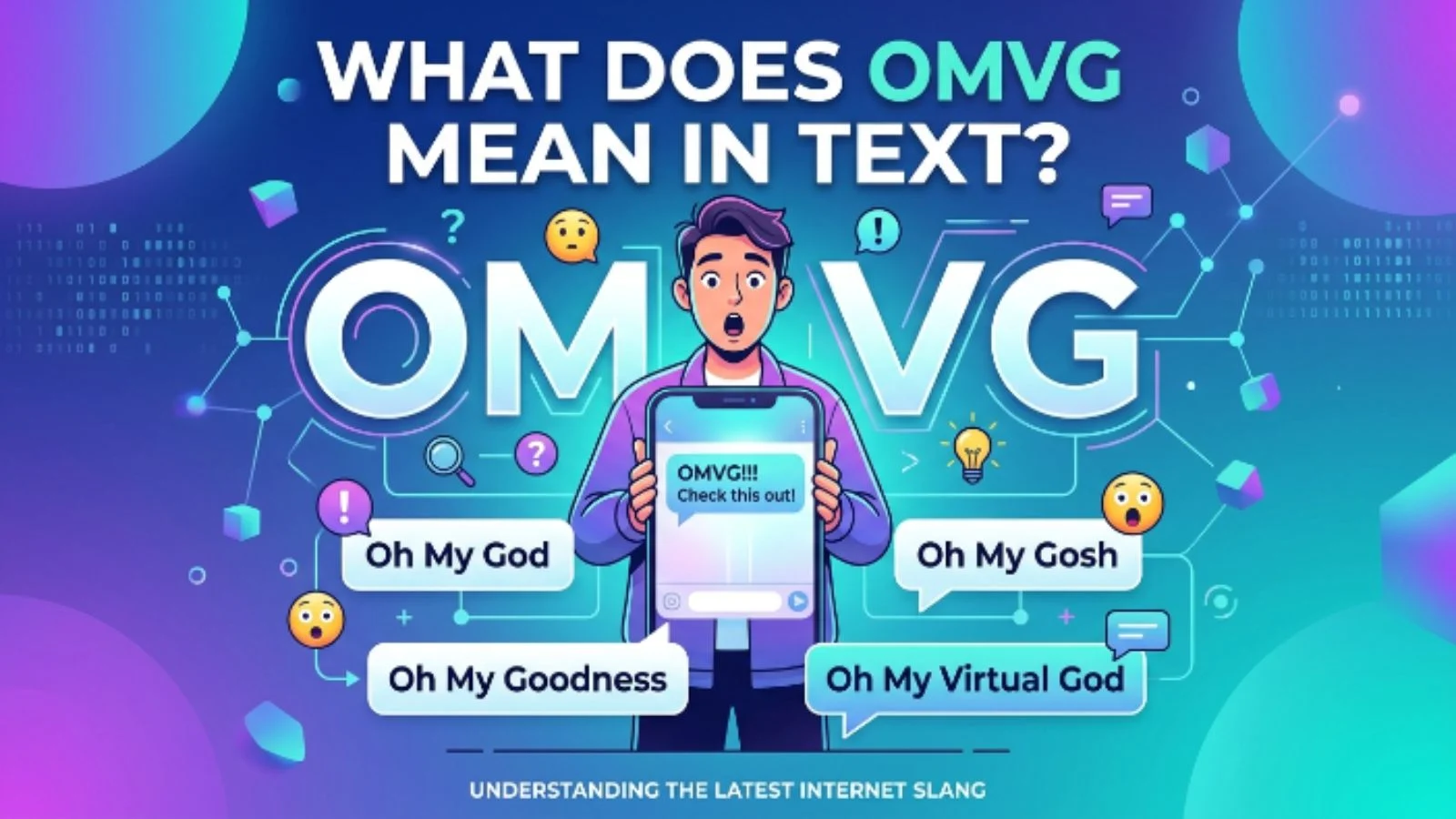
OMVG stands for “Oh My Very Goodness.”
It is an expression used to show surprise, excitement, shock, amazement, or strong emotion. The phrase is a softer and more family-friendly version of more common expressions like:
- OMG (Oh My God)
- OMFG (Oh My F***ing God)
Many people use OMVG when they want to express excitement without using language that might offend others.
Quick Definition
OMVG means “Oh My Very Goodness,” an internet slang expression used to show surprise, excitement, disbelief, or amazement in text messages and online conversations.
Simple Meaning of OMVG
In simple words, OMVG is something you say when you’re reacting strongly to something.
Think of it as saying:
- “Wow!”
- “I can’t believe it!”
- “That’s amazing!”
- “No way!”
- “That’s incredible!”
The meaning depends on the conversation, but the emotion is usually positive or surprised.
Example
Friend: “I just won free concert tickets.”
You: “OMVG! That’s awesome!”
In this example, OMVG shows excitement and happiness.
Where Is OMVG Used?
OMVG is mainly used in casual online communication.
You may see it on:
Text Messages
Friends often use OMVG when sharing exciting news.
Example:
“OMVG, I finally passed my driving test!”
Snapchat
Snapchat users frequently use short acronyms to react quickly.
Example:
“OMVG your vacation pictures look amazing.”
People may use OMVG in comments or direct messages.
Example:
“OMVG, this outfit is perfect.”
TikTok
Users often react to videos with short expressions.
Example:
“OMVG I wasn’t expecting that ending.”
Discord and Online Chats
Gamers and online communities use OMVG during exciting moments.
Example:
“OMVG, did you see that final play?”
Why Do People Use OMVG?
There are several reasons why people choose OMVG instead of other expressions.
1. It Shows Strong Emotion Quickly
Typing a short acronym is faster than writing an entire sentence.
Instead of saying:
“I am extremely surprised by this news.”
People simply type:
“OMVG!”
2. It Sounds Friendly
OMVG feels lighter and more family-friendly than some alternative expressions.
3. It Fits Internet Culture
Online communication often relies on abbreviations.
Using OMVG helps messages feel casual and conversational.
4. It Adds Personality
A simple “wow” may feel plain.
OMVG adds more excitement and energy to a message.
Real-Life Examples of OMVG in Text
Let’s look at some realistic examples.
Example 1: Excitement
Friend: “I got accepted into my dream university.”
Response: “OMVG! Congratulations!”
Meaning: You are excited for them.
Example 2: Surprise
Friend: “Guess who I met today?”
You: “Who?”
Friend: “A famous actor.”
You: “OMVG, seriously?”
Meaning: You are shocked and interested.
Example 3: Amazement
Friend: “My video reached one million views.”
You: “OMVG, that’s incredible!”
Meaning: You are impressed.
Example 4: Positive Reaction
Friend: “We’re going on vacation next week.”
You: “OMVG! Have fun!”
Meaning: You are happy and excited.
OMVG vs Similar Terms
Many internet acronyms have similar meanings. Here’s how OMVG compares.
| Acronym | Meaning | Tone |
|---|---|---|
| OMVG | Oh My Very Goodness | Friendly, surprised |
| OMG | Oh My God | Common, surprised |
| OMFG | Oh My F***ing God | Very strong reaction |
| WOW | Wow | General surprise |
| OMW | On My Way | Not related to surprise |
| SMH | Shaking My Head | Disapproval or disbelief |
The closest alternative to OMVG is OMG, but OMVG is generally considered a softer and more wholesome version.
When Should You Use OMVG?
OMVG works best in informal conversations.
Good Situations
Use OMVG when:
- Reacting to exciting news
- Expressing surprise
- Celebrating achievements
- Commenting on impressive content
- Talking with friends
Examples:
- “OMVG, that’s amazing!”
- “OMVG, I can’t believe it!”
- “OMVG, you did it!”
Situations to Avoid
Avoid using OMVG in:
- Professional emails
- Academic papers
- Business reports
- Formal workplace communication
Instead, use professional language such as:
- “That’s impressive.”
- “Congratulations.”
- “I’m delighted to hear that.”
Common Misunderstandings About OMVG
Because OMVG is not as common as OMG, people sometimes misunderstand it.
Misunderstanding #1: It Means the Same as OMG
While they are very similar, OMVG specifically means “Oh My Very Goodness.”
Misunderstanding #2: It’s a Negative Expression
OMVG is usually positive or neutral.
People use it to express surprise, excitement, or amazement rather than anger.
Misunderstanding #3: Everyone Knows It
OMVG is less common than OMG.
Some people may ask what it means if they have never seen it before.
Misunderstanding #4: It Is Always Serious
Many people use OMVG playfully or dramatically.
For example:
“OMVG, I dropped my ice cream.”
The reaction may be exaggerated for humor.
How to Respond When Someone Says OMVG
If someone texts OMVG, your response depends on the conversation.
If They Are Excited
Friend: “OMVG, I got the job!”
Response:
- “Congratulations!”
- “That’s fantastic!”
- “You deserve it.”
If They Are Surprised
Friend: “OMVG, I didn’t expect that.”
Response:
- “I know, right?”
- “Same here.”
- “It surprised me too.”
If They Are Amazed
Friend: “OMVG, look at this!”
Response:
- “That’s incredible.”
- “Wow, that’s impressive.”
- “I can see why you’re excited.”
Pro Tips for Using OMVG Correctly
Keep It Casual
OMVG is best for texting and social media.
Match the Conversation
Use it when the situation genuinely calls for excitement or surprise.
Don’t Overuse It
If every message contains OMVG, it may lose its impact.
Know Your Audience
Some people may not recognize the acronym.
If you’re unsure, writing “Wow!” may be clearer.
Use It Naturally
Good example:
“OMVG, that was unexpected.”
Less natural:
“OMVG OMVG OMVG OMVG.”
Moderation makes communication more effective.
Is OMVG Popular?
OMVG is not as widely used as OMG, but it still appears in online conversations, particularly among people who prefer cleaner or more family-friendly language.
Internet slang constantly evolves, so you may see OMVG more often in certain online communities than others.
The meaning remains consistent: expressing surprise, excitement, or amazement.
Final Thoughts
If you’ve been wondering what does OMVG mean in text, the answer is simple: OMVG stands for “Oh My Very Goodness.”
People use it to express surprise, excitement, shock, or amazement in text messages and online conversations. It’s essentially a friendly and less intense alternative to OMG.
The next time someone sends you “OMVG,” you’ll know they’re reacting strongly to something exciting, surprising, or impressive.
Frequently Asked Questions (FAQ)
What does OMVG stand for in texting?
OMVG stands for “Oh My Very Goodness.” It is used to express surprise, excitement, or amazement.
Is OMVG the same as OMG?
They are very similar. However, OMVG means “Oh My Very Goodness,” while OMG means “Oh My God.”
Is OMVG positive or negative?
OMVG is usually positive or neutral. It often expresses excitement, happiness, or surprise.
Can I use OMVG in professional communication?
It’s better to avoid OMVG in formal settings. Use professional language instead when communicating at work or in academic situations.