Have you ever received a message containing “EDT” and wondered what it actually means?
You’re not alone.
Texting abbreviations can be confusing because many of them have multiple meanings depending on the situation. While some internet slang terms are easy to recognize, EDT often leaves people scratching their heads.
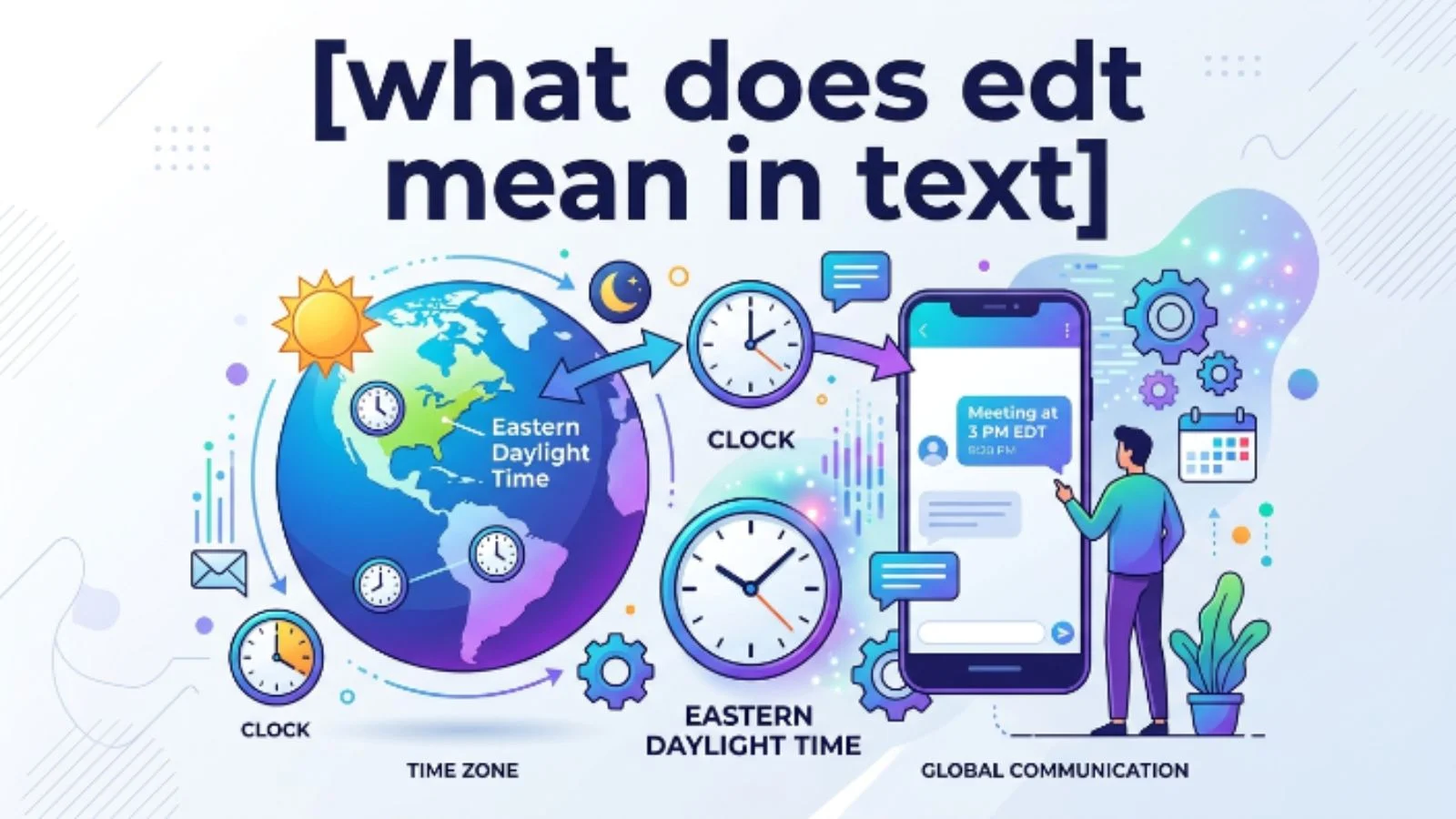
In most cases, EDT stands for Eastern Daylight Time, a time zone used in parts of North America. However, in certain online communities, gaming groups, or specialized conversations, it can sometimes have other meanings.
Let’s break it down in simple terms so you’ll always know what EDT means when you see it in a text message, email, social media post, or online chat.
What Does EDT Mean in Text?
EDT means Eastern Daylight Time.
It refers to the daylight-saving version of the Eastern Time Zone used in parts of the United States and Canada during the warmer months of the year.
Quick Definition
EDT (Eastern Daylight Time) is the time zone that is four hours behind Coordinated Universal Time (UTC-4).
People often use EDT in texts when discussing:
- Meeting times
- Online events
- Work schedules
- Gaming sessions
- Virtual appointments
- Live streams
Example
Text Message:
“The webinar starts at 7 PM EDT.”
This means the webinar begins at 7 PM according to Eastern Daylight Time.
Simple Meaning of EDT
In everyday language, EDT is simply a way to tell someone which time zone you’re talking about.
Imagine you’re texting someone who lives in another city or country. Instead of saying:
“Let’s meet at 8 PM.”
You might say:
“Let’s meet at 8 PM EDT.”
This helps avoid confusion because everyone knows which time zone you’re referring to.
Think of EDT as a label attached to a specific clock.
Where Is EDT Used?
You may encounter EDT in many different situations online and offline.
Text Messages
Friends and coworkers often use EDT when scheduling activities.
Example:
“Can we talk at 6 PM EDT?”
Social Media
Creators and businesses frequently mention EDT when announcing live events.
Example:
“Live Q&A tonight at 8 PM EDT.”
Online Gaming
Players from different regions use EDT to coordinate gaming sessions.
Example:
“Raid starts at 9 PM EDT.”
Business Communication
Remote teams commonly use EDT when setting meetings.
Example:
“The project review is scheduled for 10 AM EDT.”
Online Courses and Webinars
Educational platforms often display event times in EDT.
Example:
“Class begins at 5 PM EDT.”
Why Do People Use EDT?
People use EDT for one simple reason:
To avoid misunderstandings about time.
The internet connects people from all over the world. Without specifying a time zone, scheduling becomes confusing.
Benefits of using EDT include:
- Clear communication
- Fewer scheduling mistakes
- Easier international coordination
- Better planning for online events
- Reduced confusion across regions
When someone includes EDT in a text, they’re usually trying to make sure everyone shows up at the correct time.
Real-Life Examples of EDT in Text
Here are some common examples you might see.
Example 1
Friend:
“Movie night starts at 8 PM EDT.”
Meaning:
Your friend is telling you the movie begins according to Eastern Daylight Time.
Example 2
Coworker:
“The meeting has been moved to 2 PM EDT.”
Meaning:
The new meeting time follows the Eastern Daylight Time zone.
Example 3
Gaming Group:
“Tournament check-in opens at 6 PM EDT.”
Meaning:
Players should join according to EDT.
Example 4
Social Media Post:
“Live stream starts tomorrow at noon EDT.”
Meaning:
Viewers should convert noon EDT to their local time zone.
EDT vs Similar Time Zone Terms
Many people confuse EDT with other time abbreviations.
| Term | Full Form | When Used |
|---|---|---|
| EDT | Eastern Daylight Time | During daylight saving time |
| EST | Eastern Standard Time | During standard time |
| CDT | Central Daylight Time | Central region during daylight saving |
| CST | Central Standard Time | Central region during standard time |
| PDT | Pacific Daylight Time | Pacific region during daylight saving |
| PST | Pacific Standard Time | Pacific region during standard time |
EDT vs EST
This is the most common source of confusion.
| EDT | EST |
|---|---|
| Eastern Daylight Time | Eastern Standard Time |
| Used during daylight saving months | Used during standard time months |
| UTC-4 | UTC-5 |
If someone says a meeting is at 3 PM EDT, that’s not necessarily the same as 3 PM EST.
Always check which abbreviation is being used.
When Should You Use EDT?
Use EDT when:
- Scheduling meetings
- Organizing online events
- Planning webinars
- Coordinating with people in different locations
- Sharing live stream times
- Setting gaming event schedules
Good Example
“The presentation starts at 4 PM EDT.”
Less Helpful Example
“The presentation starts at 4 PM.”
Without the time zone, people in different locations may arrive at the wrong time.
Common Misunderstandings About EDT
Mistake 1: Thinking EDT Is Internet Slang
Many people assume EDT is a texting acronym similar to LOL or BRB.
In reality, it’s usually a time zone abbreviation.
Mistake 2: Confusing EDT with EST
These terms are closely related but not identical.
Always verify which one is being used.
Mistake 3: Ignoring Time Zone Labels
Some people overlook the EDT label entirely and assume the time is local.
This can lead to missed meetings, events, or deadlines.
Mistake 4: Assuming Everyone Uses the Same Time Zone
Online communities often include members from different countries.
EDT helps create a common reference point.
Other Possible Meanings of EDT
Although Eastern Daylight Time is the most common meaning in text messages, EDT can occasionally represent other phrases depending on context.
Examples may include:
- Educational technology terms
- Technical or engineering abbreviations
- Organization-specific acronyms
That’s why context matters.
If someone writes:
“The meeting starts at 3 PM EDT.”
The meaning is clearly Eastern Daylight Time.
If the conversation is about a specialized industry, EDT could mean something different.
Pro Tips for Understanding EDT
Pay Attention to Context
Look at the rest of the message.
If times, meetings, events, or schedules are mentioned, EDT almost certainly refers to Eastern Daylight Time.
Convert the Time if Necessary
If you live in another region, convert EDT to your local time zone before planning.
Don’t Assume EST and EDT Are the Same
A one-hour difference can cause major scheduling problems.
Ask for Clarification
If you’re unsure what EDT means in a specific conversation, simply ask.
A quick question can prevent confusion later.
Final Thoughts
So, what does EDT mean in text?
In most situations, EDT stands for Eastern Daylight Time, a time zone used in parts of the United States and Canada during daylight-saving months.
People use it to schedule meetings, online events, gaming sessions, webinars, and social gatherings without causing confusion about time.
Whenever you see EDT in a text, look at the context. If the conversation involves dates, schedules, or appointments, it’s almost certainly referring to Eastern Daylight Time.
Understanding this simple abbreviation can help you avoid missed events and communicate more clearly with people around the world.
Frequently Asked Questions
What does EDT stand for in texting?
EDT usually stands for Eastern Daylight Time, a time zone used during daylight-saving periods in the eastern part of North America.
Is EDT the same as EST?
No. EDT and EST are different. EDT is used during daylight-saving time, while EST is used during standard time.
Why do people put EDT after a time?
They use it to indicate the specific time zone being referenced, helping people in different locations avoid confusion.
Is EDT internet slang?
Usually no. In most text messages and online conversations, EDT refers to Eastern Daylight Time rather than internet slang.