Have you ever received a message that simply said “DHMU” and wondered what it meant?
You’re not alone.
Text messaging and social media are full of abbreviations that can leave people confused. One of those terms is DHMU, a popular internet slang expression often used in casual conversations, social media posts, and online chats.
If you’re trying to figure out what DHMU means in text, when to use it, and what someone is really trying to say when they type it, this guide will explain everything in simple language.
What Does DHMU Mean in Text?
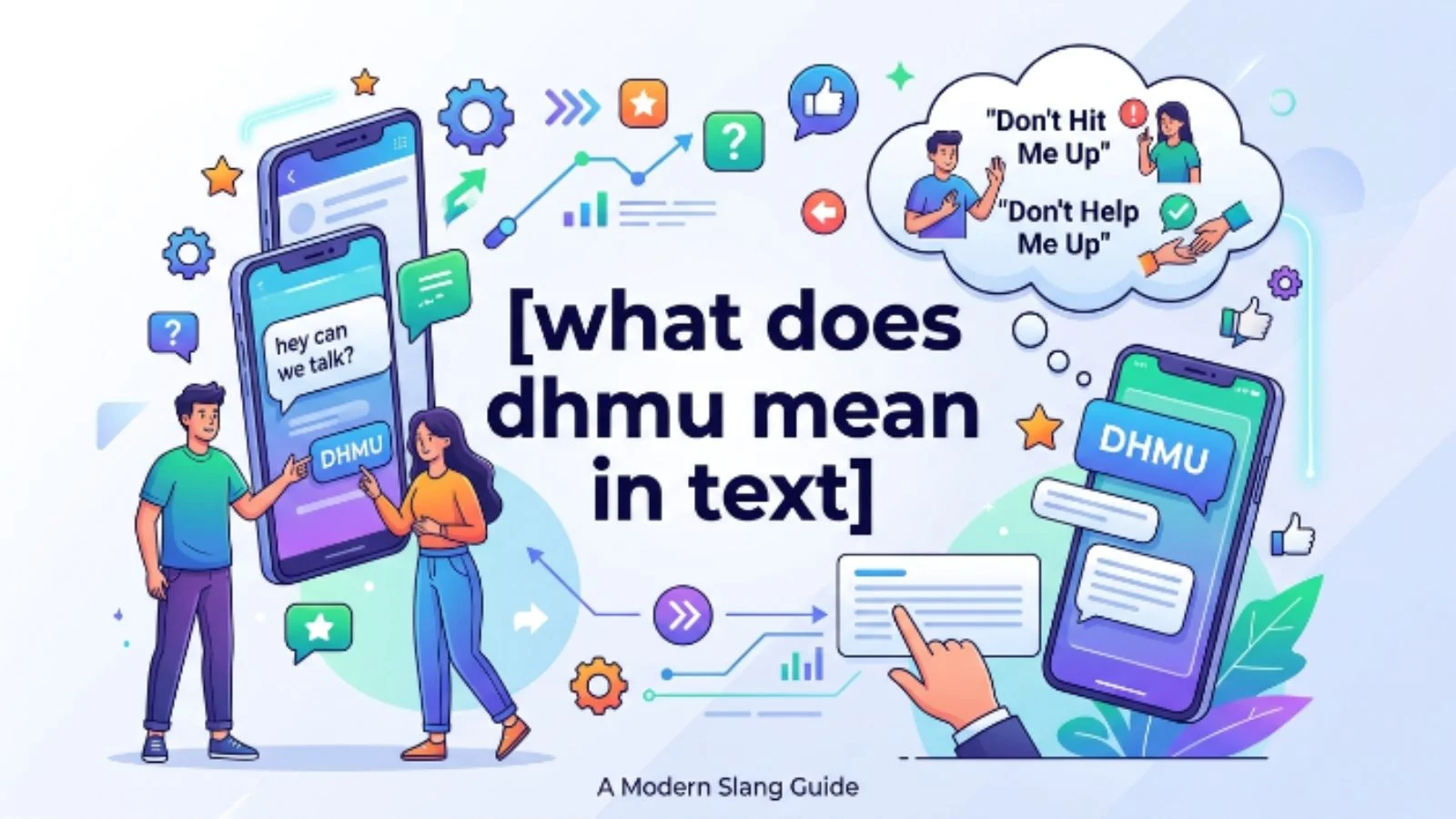
DHMU stands for “Don’t Hit Me Up.”
In texting and online conversations, “hit me up” means contact me, message me, call me, or reach out to me.
So when someone says DHMU, they are telling others:
“Don’t contact me.”
Quick Definition
DHMU = Don’t Hit Me Up
Meaning: A request for someone not to text, call, message, or bother the person.
The tone can be serious, playful, annoyed, or temporary depending on the situation.
Simple Meaning of DHMU
In everyday language, DHMU simply means:
- Don’t text me.
- Don’t message me.
- Don’t contact me right now.
- Leave me alone for the moment.
The phrase is often used when someone:
- Feels upset
- Wants personal space
- Is busy
- Is joking with friends
- Doesn’t want unnecessary conversations
The exact meaning depends on the context of the conversation.
Where Is DHMU Used?
DHMU is commonly seen on many online platforms.
Text Messages
People may send DHMU directly to someone when they need space.
Example:
“Busy all day. DHMU until tonight.”
Social Media Posts
Users often post DHMU as a status update.
Example:
“DHMU today. I’m taking a break from everything.”
Snapchat
Snapchat users frequently use DHMU in stories when they don’t want conversations or streak messages.
You’ll often find DHMU in captions, stories, or notes.
Example:
“DHMU if you’re only texting because you’re bored.”
TikTok
TikTok creators sometimes use DHMU in videos to express frustration, disappointment, or humor.
Online Gaming
Gamers may use DHMU when they don’t want invites or messages during gameplay.
Why Do People Use DHMU?
There are several reasons why someone might use this abbreviation.
1. To Ask for Space
Sometimes people simply need a break from conversations.
Example:
“DHMU today. I need some time to myself.”
2. To Show Frustration
Someone may use DHMU after an argument or disappointing situation.
Example:
“If you’re going to keep lying, DHMU.”
3. To Avoid Unwanted Messages
People use it when they don’t want random texts.
Example:
“DHMU unless it’s important.”
4. To Be Funny
Not every DHMU message is serious.
Friends often use it jokingly.
Example:
“You ate the last slice of pizza. DHMU.”
5. To Set Boundaries
Many people use DHMU as a quick way to communicate personal boundaries online.
Real-Life Examples of DHMU in Text
Let’s look at some examples and what they actually mean.
Example 1
Text:
“DHMU today. I’m exhausted.”
Meaning:
The person wants some quiet time and doesn’t feel like chatting.
Example 2
Text:
“If you’re only messaging for favors, DHMU.”
Meaning:
The person is frustrated with people who only contact them when they need something.
Example 3
Text:
“DHMU until I finish my exams.”
Meaning:
The person is focusing on studying and wants fewer distractions.
Example 4
Text:
“You forgot my birthday. DHMU.”
Meaning:
The sender is upset, though it could be serious or playful depending on the relationship.
Example 5
Social Media Post:
“DHMU. Bad mood.”
Meaning:
The person doesn’t want conversations right now.
DHMU vs Similar Terms
Many texting abbreviations have similar meanings. Here’s how DHMU compares.
| Slang Term | Meaning | Usage |
|---|---|---|
| DHMU | Don’t Hit Me Up | Don’t contact me |
| HMU | Hit Me Up | Contact me |
| IDC | I Don’t Care | Showing indifference |
| DND | Do Not Disturb | Not available right now |
| BRB | Be Right Back | Temporary absence |
| AFK | Away From Keyboard | Not currently active |
Notice that DHMU is essentially the opposite of HMU.
- HMU = Contact me
- DHMU = Don’t contact me
When Should You Use DHMU?
DHMU works best in casual conversations.
You can use it when:
- You’re busy
- You need personal space
- You’re taking a break from social media
- You’re joking with close friends
- You want fewer distractions
Good Example
“DHMU while I’m working. I’ll reply later.”
This clearly communicates that you’re unavailable.
Another Good Example
“DHMU unless it’s urgent.”
This tells people you only want important messages.
When Should You Avoid Using DHMU?
There are situations where DHMU may come across as rude.
Avoid using it:
- In professional emails
- With clients
- In business communication
- With teachers or professors
- During formal conversations
Instead of DHMU, Try:
- “I’m unavailable right now.”
- “I’ll respond later.”
- “Please contact me tomorrow.”
- “I’m taking a break from messages.”
These alternatives sound more professional and polite.
Common Misunderstandings About DHMU
Many people misunderstand this slang because context matters.
Misunderstanding #1: DHMU Always Means Anger
Not true.
Sometimes it simply means:
“I’m busy.”
or
“I need a break.”
Misunderstanding #2: DHMU Means Permanent Blocking
No.
In most cases, DHMU refers to a temporary request for space.
Misunderstanding #3: DHMU Is Always Serious
Many friends use it jokingly.
Example:
“You beat me again in the game. DHMU.”
The sender is likely joking rather than actually ending communication.
Misunderstanding #4: DHMU Is Offensive
The abbreviation itself isn’t offensive.
However, the tone can feel harsh depending on how it’s used.
Pro Tips for Using DHMU
If you plan to use DHMU, keep these tips in mind.
Know Your Audience
Close friends will usually understand the slang.
Older family members or coworkers may not.
Add Context
Instead of simply saying DHMU, explain why.
Example:
“DHMU today. I’m focusing on work.”
This sounds clearer and less rude.
Consider Your Tone
A short DHMU message can sound harsh.
Adding context makes it friendlier.
Use It Sparingly
Constantly telling people not to contact you can create misunderstandings.
Use it only when necessary.
Remember It Is Informal
DHMU belongs in casual conversations, not professional settings.
Is DHMU Positive or Negative?
DHMU is generally considered neutral.
Its emotional tone depends entirely on context.
Positive Usage
“DHMU while I’m on vacation. I need to relax.”
Neutral Usage
“DHMU until after class.”
Negative Usage
“DHMU ever again.”
The wording around DHMU determines how it feels.
Final Thoughts
DHMU is a common texting abbreviation that stands for “Don’t Hit Me Up.” It means someone doesn’t want to be contacted, either temporarily or in a specific situation.
While it can sometimes express frustration, it is often used simply to ask for space, avoid distractions, or communicate boundaries. Understanding the context is important because the same abbreviation can sound serious, playful, or completely neutral depending on who is using it.
The next time you see DHMU in a text, Snapchat story, Instagram post, or online chat, you’ll know exactly what the sender means.
Frequently Asked Questions
What does DHMU stand for in texting?
DHMU stands for “Don’t Hit Me Up.” It means “don’t contact me” or “don’t message me.”
Is DHMU rude?
Not always. It can sound rude if used without context, but many people use it casually or jokingly.
What is the opposite of DHMU?
The opposite is HMU, which stands for “Hit Me Up.” It means “contact me” or “message me.”
Can DHMU be used jokingly?
Yes. Friends often use DHMU humorously after a joke, game, or playful disagreement.
Is DHMU popular on social media?
Yes. DHMU is commonly used on Snapchat, Instagram, TikTok, text messages, and other online platforms.