Have you ever received a message containing “TW” and wondered what it meant?
You’re not alone.
Texting abbreviations change constantly, and some of them can have multiple meanings depending on the situation. Among these abbreviations, TW is one that often confuses people because it can mean different things on different platforms.
In most online conversations, social media posts, and text messages, TW usually stands for “Trigger Warning.” However, there are other meanings you should know as well.
This guide explains exactly what TW mean in text, where it’s used, how people use it, and when you should use it yourself.
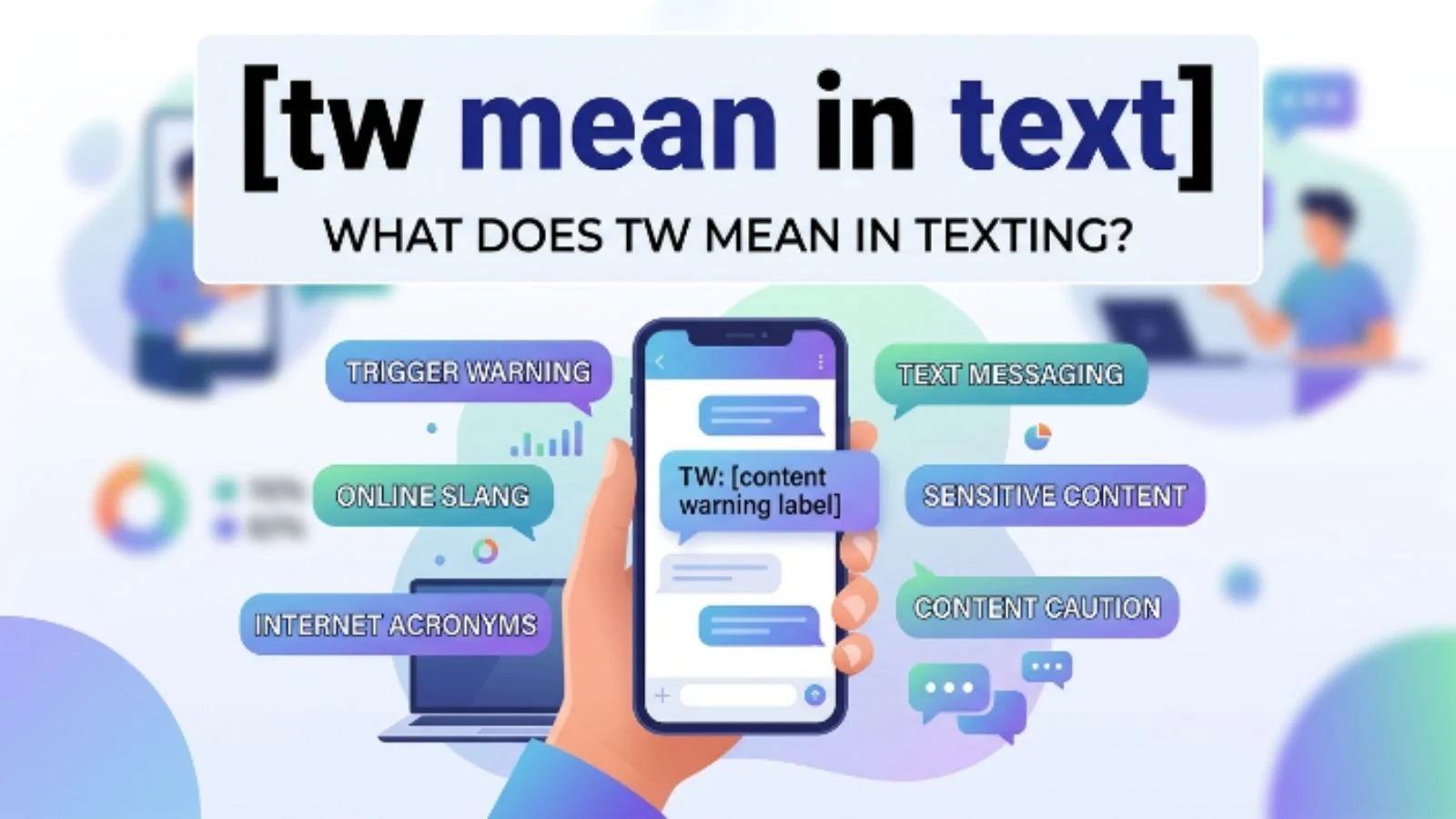
What Does TW Mean in Text?
TW means “Trigger Warning.”
A trigger warning is a notice placed before content that may be upsetting, disturbing, or emotionally difficult for some people.
People use TW to alert readers that a message, video, image, or discussion contains sensitive topics.
Featured Snippet Definition
TW stands for “Trigger Warning” in text messages and online communication. It is used to warn people that upcoming content may contain sensitive, upsetting, or emotionally triggering material such as violence, abuse, injury, or other difficult topics.
Simple Meaning of TW
In simple words, TW means “be prepared for sensitive content.”
Think of it as a heads-up before someone discusses something that could make another person uncomfortable or emotional.
For example:
TW: Graphic injury discussion ahead.
This tells readers that the following content may be disturbing.
The goal isn’t to stop people from reading. Instead, it’s to help them decide whether they want to continue.
Where Is TW Used?
You’ll commonly see TW in:
- Text messages
- Social media posts
- Online forums
- Group chats
- Blogs
- Discussion boards
- Video descriptions
- Comment sections
Platforms where TW frequently appears include:
- TikTok
- X (Twitter)
- Discord
- Tumblr
People often place TW at the beginning of a post so readers see it before viewing the content.
Examples:
- TW: Violence
- TW: Injury
- TW: Mental health discussion
- TW: Abuse
Why Do People Use TW?
People use trigger warnings for several reasons.
1. To Show Respect
A warning allows readers to prepare themselves before viewing potentially upsetting content.
2. To Promote Awareness
Some discussions involve difficult subjects. A trigger warning helps people know what to expect.
3. To Protect Sensitive Audiences
Certain topics may affect individuals differently based on personal experiences.
4. To Encourage Responsible Sharing
Adding TW demonstrates consideration for others when discussing serious issues.
Real-Life Examples of TW in Text
Understanding TW becomes easier when you see it in actual conversations.
Example 1
Person A: Did you see Sarah’s post?
Person B: Yes. TW: It talks about a serious car accident.
Meaning: Person B is warning that the post contains potentially upsetting information.
Example 2
Text Message:
“TW: Discussion about grief and loss.”
Meaning: The upcoming conversation includes emotional topics.
Example 3
Social Media Caption:
“TW: Graphic injury photos.”
Meaning: The images may be disturbing to some viewers.
Example 4
Group Chat Message:
“TW: Mental health conversation.”
Meaning: Sensitive mental health topics will be discussed.
Other Meanings of TW in Text
Although Trigger Warning is the most common meaning today, TW can occasionally mean other things.
1. Trigger Warning
Most common meaning.
Example:
“TW: Violence.”
2. This Week
Sometimes used in casual conversations.
Example:
“I’ve been really busy TW.”
Meaning: Busy this week.
3. Team Work
Occasionally used in professional chats.
Example:
“Great TW on that project.”
Meaning: Great teamwork.
4. Time Will
Rare and highly context-dependent.
Example:
“TW tell the story.”
Because TW has multiple meanings, context is important.
TW vs Similar Terms
Many people confuse TW with other internet abbreviations.
| Term | Meaning | Usage |
|---|---|---|
| TW | Trigger Warning | Warns about sensitive content |
| CW | Content Warning | Warns about potentially upsetting content |
| FYI | For Your Information | Shares information |
| PSA | Public Service Announcement | Important notice |
| NSFW | Not Safe For Work | Indicates inappropriate workplace content |
TW vs CW
The most common comparison is TW vs CW.
TW (Trigger Warning) focuses on content that may emotionally affect some readers.
CW (Content Warning) is broader and can apply to any potentially disturbing or sensitive material.
Many people use the two terms interchangeably.
When Should You Use TW?
You may want to use TW when discussing:
- Violence
- Abuse
- Self-harm discussions
- Serious injuries
- Death
- Trauma
- Graphic medical situations
- Sensitive mental health topics
Examples:
- “TW: Discussion of grief.”
- “TW: Graphic accident details.”
- “TW: Emotional abuse.”
Using TW can help create a more considerate communication environment.
When You Don’t Need to Use TW
Not every serious topic requires a trigger warning.
Generally, TW isn’t necessary for:
- Everyday opinions
- Normal disagreements
- Basic news updates
- Regular life events
- Non-sensitive discussions
Overusing trigger warnings can sometimes reduce their effectiveness.
Use them when genuinely appropriate.
Common Misunderstandings About TW
Misunderstanding #1: TW Always Means Trigger Warning
Not necessarily.
While Trigger Warning is the most common meaning, context matters.
For example:
“I’m busy TW.”
Here, TW may mean This Week rather than Trigger Warning.
Misunderstanding #2: TW Is Only Used on Social Media
False.
TW is used across texting, messaging apps, forums, blogs, and online communities.
Misunderstanding #3: TW Means the Same Thing as NSFW
Incorrect.
TW warns about potentially upsetting content.
NSFW warns about content inappropriate for workplaces or public settings.
Misunderstanding #4: Only Certain People Use TW
People of all ages and backgrounds use trigger warnings when discussing sensitive topics.
Pro Tips for Using TW Correctly
Put It Before the Content
Always place the warning before the sensitive material.
Correct:
TW: Graphic injury discussion
Incorrect:
Graphic injury discussion… TW
Be Specific
Instead of writing only “TW,” explain what the warning relates to.
Better:
- TW: Violence
- TW: Abuse
- TW: Injury
Keep It Short
The warning should be brief and easy to understand.
Consider Your Audience
Think about who may read your message and whether a warning would be helpful.
Examples of TW Used Correctly
Here are some practical examples:
- TW: Discussion of grief and loss.
- TW: Graphic medical content.
- TW: Mentions of violence.
- TW: Emotional abuse discussion.
- TW: Accident photos included.
These examples clearly tell readers what to expect.
Why Understanding TW Matters
Internet communication moves quickly, and abbreviations can easily create confusion.
Knowing what TW means in text helps you:
- Understand online conversations better
- Interpret social media posts correctly
- Communicate more effectively
- Use warnings appropriately when discussing sensitive topics
As online communities continue to grow, understanding common internet slang and abbreviations becomes increasingly useful.
Final Thoughts
If you’ve been wondering what does TW mean in text, the answer is usually “Trigger Warning.”
It’s a simple abbreviation used to alert people that sensitive or potentially upsetting content is coming next. While TW can occasionally mean other things such as This Week or Team Work, context usually makes the intended meaning clear.
The next time you see TW at the beginning of a post, message, or discussion, you’ll know that it’s there to provide a helpful heads-up before sensitive content appears.
Frequently Asked Questions
What does TW mean in texting?
In texting, TW most commonly means “Trigger Warning.” It alerts readers that sensitive content follows.
Does TW always mean Trigger Warning?
No. Although Trigger Warning is the most common meaning, TW can also mean This Week, Team Work, or other phrases depending on the context.
What is the difference between TW and CW?
TW (Trigger Warning) specifically warns about potentially triggering content, while CW (Content Warning) is a broader warning for sensitive material.
Is TW commonly used on social media?
Yes. TW is widely used on Instagram, TikTok, Reddit, X (Twitter), Discord, Facebook, and many other online platforms.