In today’s digital world, people do not always write full words when they chat. Instead, they use short and easy forms like “luv,” “u,” “gr8,” and many more. One of the most common words you may see in messages, social media, or comments is “luv.”
But what does luv mean in text? Is it different from “love”? Is it correct English? When should you use it?
This full guide will explain everything in very simple English so even beginners can understand easily. You will also see real examples, tables, mistakes, and modern usage in 2026.
What Does “Luv” Mean in Text? (Simple Definition)
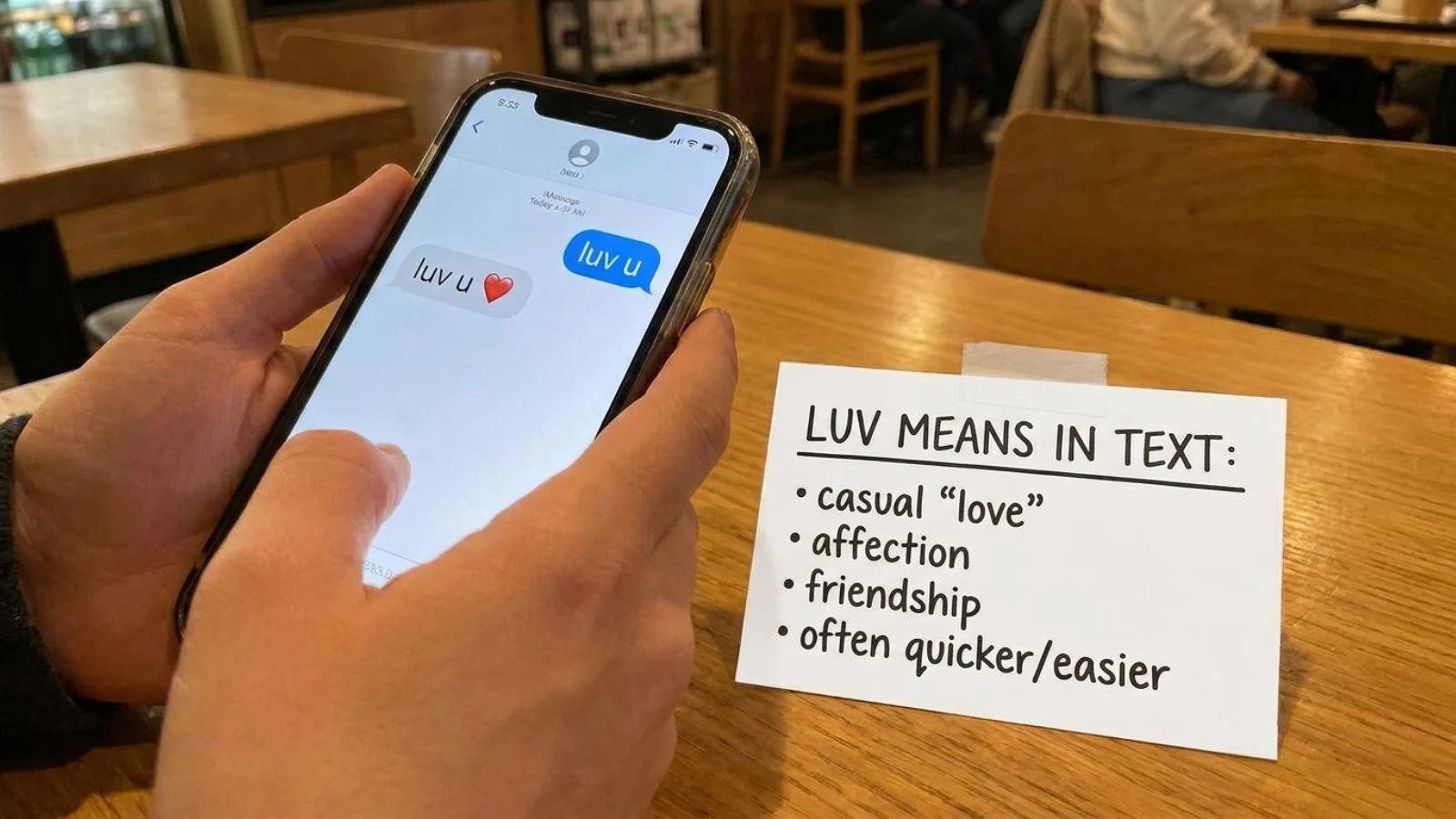
The word “luv” is an informal way of writing “love.”
In simple words:
- Luv = Love (but casual and friendly spelling)
People use “luv” in texting when they want to sound:
- Friendly
- Soft
- Relaxed
- Less serious
It is not used in formal writing like school essays or business emails.
Example:
- “I luv this song.”
This means: “I love this song.”
(It shows strong liking in a casual way)
Is “Luv” the Same as “Love”?
Yes and no.
Both words have similar meaning, but they are used in different situations.
Simple Difference:
- Love = Correct, formal, emotional word
- Luv = Casual, friendly, texting word
Example:
- “I love my family.” (formal and correct)
- “I luv this pizza.” (casual and fun)
So, “luv” is not wrong in chats, but it is not used in serious writing.
Origin & History of “Luv”
The word “luv” comes from internet slang and texting culture.
How it started:
- In early SMS texting (around 2000s), people had limited character space.
- They started shortening words to save time and space.
- “Love” became “luv” because it is faster to type.
Why “u” replaced “o”?
- “U” is easier and faster than “ove”
- It matches fast typing style in chats
Where it became popular:
- SMS texting
- Early social media like Facebook chats
- Messaging apps like WhatsApp and Messenger
- Later used in TikTok and Instagram captions
Today in 2026, “luv” is still widely used in casual texting worldwide.
How “Luv” Is Used in Real Life (Context)
People use “luv” in many emotional and friendly situations.
1. Friendly Messages
Used between friends.
- “Hey luv, how are you?”
(Friendly greeting, not romantic)
2. Soft Emotional Expression
Used to show care.
- “Take care, luv.”
(Means: I care about you)
3. Social Media Comments
Used to sound warm.
- “Luv this pic!”
(Means: I really like this picture)
4. Romantic Texts (less formal)
Sometimes used in relationships.
- “Miss you, luv.”
(Shows affection in a soft way)
Personality & Tone of “Luv” Usage
The use of “luv” can also show personality and tone.
People who use “luv” often appear:
- Friendly
- Soft-spoken in text
- Emotionally expressive
- Casual communicators
Tone of “luv”:
- Warm
- Light
- Informal
- Caring
It reduces seriousness and makes messages feel more relaxed.
Real-Life Examples + Short Dialogues
Let’s understand “luv” through simple conversations.
Example 1: Friends Chat
A: “Where are you, luv?”
B: “I’m at home, coming soon.”
Explanation:
“Luv” shows friendly care between friends.
Example 2: Social Media Comment
User: “Just posted a new pic.”
Comment: “Luv this vibe!”
Explanation:
It means the person really likes the picture or style.
Example 3: Family Message
Mother: “Eat your food, luv.”
Child: “Okay, Mom.”
Explanation:
Here “luv” shows affection and care.
Example 4: Romantic Chat
A: “Good night, luv.”
B: “Good night, sleep well.”
Explanation:
It shows love in a soft, informal way.
Comparison Table: Luv vs Love vs Luv U vs Love U
| Word | Meaning | Usage | Formal? |
|---|---|---|---|
| Love | Strong emotional feeling | All situations | Yes |
| Luv | Casual version of love | Texting, chats | No |
| Luv U | Casual “I love you” | Friends, partners | No |
| Love U | Direct “I love you” | Emotional messages | Semi-formal |
Common Mistakes & Misconceptions
Many beginners misunderstand “luv.” Let’s clear them.
Mistake 1: Thinking “luv” is wrong English
- Wrong idea: “Luv is incorrect”
- Truth: It is correct in informal texting only
Mistake 2: Using “luv” in formal writing
- Wrong: “I luv my job in report”
- Correct: “I love my job in report”
Mistake 3: Thinking it always means romantic love
- “luv” can mean:
- Friendship
- Care
- Appreciation
- Romantic love
Mistake 4: Overusing it
Too much use can make messages look unnatural.
Modern Usage of “Luv” in 2026
In 2026, texting language has evolved, but “luv” is still alive.
Where it is commonly used now:
- WhatsApp chats
- Instagram captions
- TikTok comments
- Snapchat messages
- Discord conversations
Modern examples:
- “Luv this aesthetic 2026 vibe.”
- “Still luv this song after years.”
- “Luv how this app works now.”
Even with AI chat tools and voice typing, people still prefer short emotional words like “luv.”
Why People Prefer Using “Luv”
There are simple reasons:
1. Faster typing
Short words save time.
2. Friendly tone
It feels softer than “love.”
3. Social media style
Matches modern digital communication.
4. Emotional warmth
It feels more personal in chats.
When You Should NOT Use “Luv”
Avoid “luv” in:
- School essays
- Exams
- Official emails
- Job applications
- Professional documents
Example:
- Wrong: “I luv to work in your company.”
- Correct: “I love to work in your company.”
Simple Rules for Using “Luv”
To use it correctly, follow these rules:
- Use only in informal chats
- Use with friends or close people
- Avoid in formal writing
- Use to show soft emotion
- Do not overuse it
FAQs About “Luv Mean in Text”
1. What does luv mean in text?
“Luv” means “love” in a casual and informal way used in texting and social media.
2. Is luv a real English word?
Yes, but it is informal slang, not standard English.
3. Is luv romantic or friendly?
It can be both. It depends on the context of the message.
4. Can I use luv in school writing?
No, you should use “love” in formal or academic writing.
5. Is luv rude or wrong?
No, it is not rude or wrong. It is just informal texting style.
6. Why do people write luv instead of love?
People use it to type faster and sound more casual.
7. Is luv still used in 2026?
Yes, it is still very popular in chats, social media, and messaging apps.
Conclusion
The word “luv” is a simple and casual way of writing “love” in text messages. It is widely used in daily chatting, social media, and informal communication. While it is not suitable for formal writing, it is very common in friendly and emotional conversations. Understanding luv meaning in text helps you read messages better and use modern slang correctly in 2026. It shows warmth, care, and casual emotion in a short form. If you are learning internet slang, start practicing with simple words like this. Keep exploring more texting meanings to improve your digital communication skills every day.