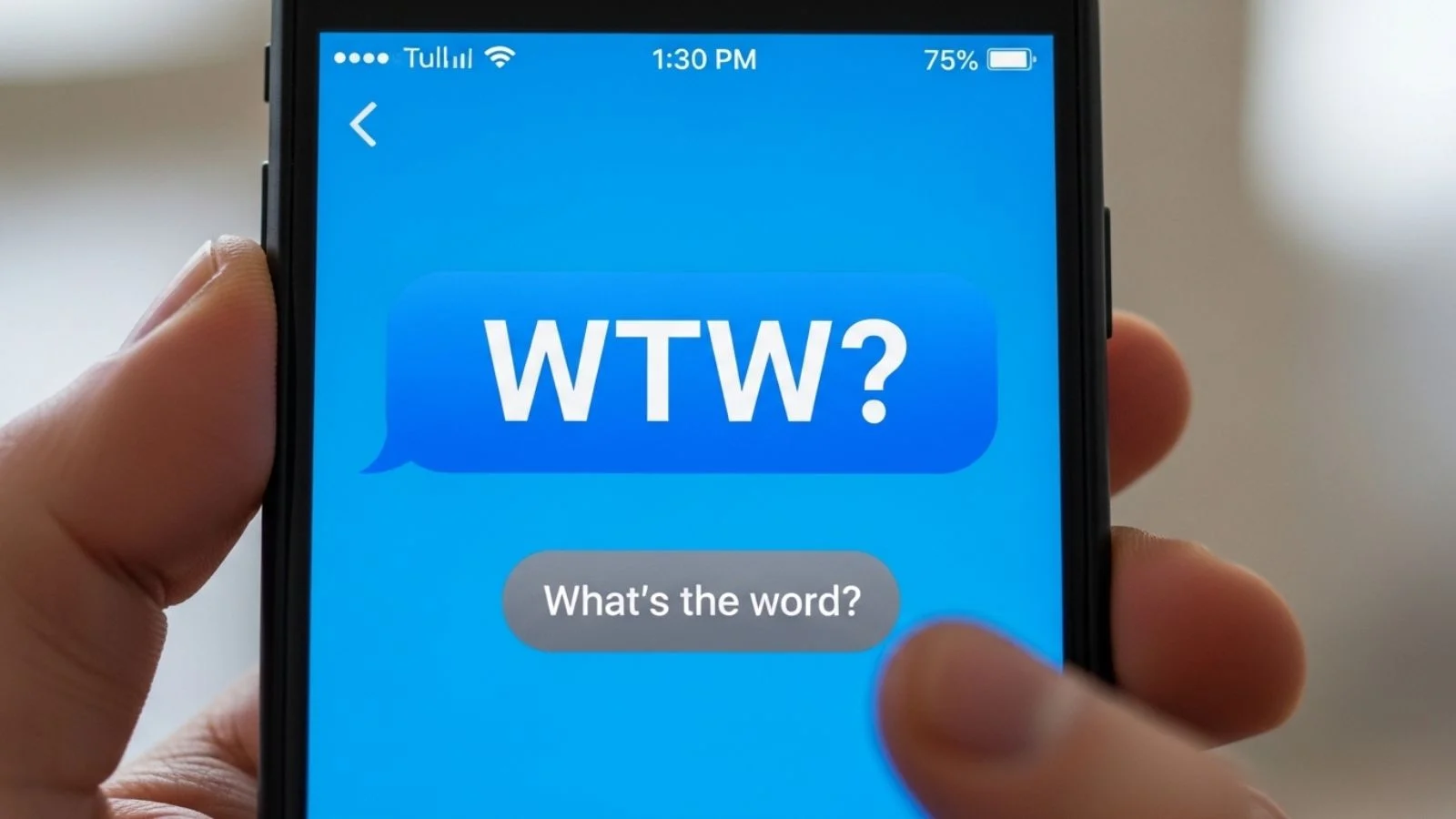
If you have seen “WTW” in a message and felt confused, you are not alone. This short form is very common in chats, especially among young people.
In this easy guide, you will learn the meaning of WTW, where it came from, how to use it, and real-life examples. Everything is explained in simple English so anyone can understand.
What Does WTW Mean?
WTW stands for:
“What’s the word?”
It is a casual way to ask:
- What’s going on?
- What are you doing?
- Any plans?
- What’s up?
Simple Meaning
WTW = Asking someone what they are doing or what’s happening
It is friendly, short, and quick to type.
What Does “What’s the Word” Really Mean?
The phrase “What’s the word” is not new. People have used it for many years in spoken English.
In simple terms:
- It means: “Tell me the news”
- Or: “What’s happening right now?”
Example
- Friend: “WTW tonight?”
- Meaning: “What are you doing tonight?”
This makes it very useful in daily conversations.
Where Did WTW Come From? (Origin & History)
The short form WTW comes from texting culture. But its base phrase is older.
1. Spoken English
People have used “What’s the word?” in speech for decades. It was common in casual and street conversations.
2. Rise of Texting
When texting became popular:
- People started shortening phrases
- Like LOL, BRB, and OMG
Then WTW became popular too.
3. Social Media Growth
Apps like:
- Snapchat
helped WTW spread fast, especially among teens.
4. Modern Use (2026)
In 2026, WTW is still popular and widely used in:
- Chats
- Group messages
- Online gaming
- Casual texting
How Is WTW Used in Text?
WTW is mainly used to:
1. Start a Conversation
- “WTW bro?”
- Meaning: “Hey, what’s up?”
2. Ask About Plans
- “WTW this weekend?”
- Meaning: “What are your plans?”
3. Check on Someone
- “WTW, you okay?”
- Meaning: “What’s going on with you?”
Real-Life Examples with Simple Explanations
Example 1
Message:
“WTW tonight?”
Meaning:
The person is asking about plans for tonight.
Example 2
Message:
“Hey, WTW?”
Meaning:
A simple way to say “What’s up?”
Example 3
Message:
“WTW after class?”
Meaning:
They want to know what you will do after class.
Example 4 (Short Dialogue)
A: “WTW today?”
B: “Just chilling at home.”
Explanation:
A is asking what B is doing today. B replies casually.
Example 5 (Friends Chat)
A: “WTW this weekend?”
B: “Let’s watch a movie.”
Explanation:
A is asking for plans. B suggests an activity.
Different Meanings of WTW (Context Matters)
While “What’s the word?” is the main meaning, WTW can change slightly based on context.
| Situation | Meaning |
|---|---|
| Casual chat | What’s up? |
| Planning | What are we doing? |
| Checking in | What’s going on? |
| Social invite | Any plans? |
Personality Traits Behind Using WTW
People who use WTW often show certain communication styles.
1. Friendly
They like easy and casual talk.
2. Social
They enjoy chatting and making plans.
3. Informal
They prefer short and relaxed language.
4. Modern
They follow current texting trends.
When Should You Use WTW?
You can use WTW in these situations:
Good Situations
- Talking to friends
- Chatting casually
- Asking about plans
- Starting conversations
Example
“WTW later?”
Meaning: “What are we doing later?”
When NOT to Use WTW
WTW is informal, so avoid it in:
- Job emails
- School assignments
- Formal messages
- Talking to elders (in some cultures)
Wrong Example
“WTW regarding the meeting?”
This sounds unprofessional.
Modern Usage in 2026
WTW is still very popular in 2026, but it is used in slightly updated ways.
1. With Emojis or Tone (if used in real chats)
Even without emojis, tone matters.
- “WTW??” → Excited or curious
- “wtw” → Chill and relaxed
2. In Group Chats
- “WTW everyone?”
- Meaning: Asking the whole group for plans
3. In Gaming
- “WTW after this match?”
- Meaning: What’s next?
Common Mistakes and Misconceptions
Mistake 1: Thinking It Has One Fixed Meaning
WTW does not always mean the same thing. It depends on context.
Mistake 2: Using It in Formal Writing
WTW is not for professional communication.
Mistake 3: Confusing It with Other Slang
Some people mix it with:
- WYD (What you doing)
- WYA (Where you at)
Difference Table
| Slang | Meaning |
|---|---|
| WTW | What’s the word |
| WYD | What are you doing |
| WYA | Where are you |
Mistake 4: Overusing It
Using WTW in every message can feel repetitive.
Similar Slang Words to WTW
Here are some similar expressions:
- WYD – What are you doing
- SUP – What’s up
- HMU – Hit me up
- LMK – Let me know
These can sometimes replace WTW depending on context.
Short Dialogues for Practice
Dialogue 1
A: “WTW tonight?”
B: “Going out with friends.”
Explanation:
A asks for plans. B answers simply.
Dialogue 2
A: “WTW bro?”
B: “Nothing much.”
Explanation:
Casual greeting between friends.
Dialogue 3
A: “WTW after work?”
B: “Let’s eat.”
Explanation:
A is asking for a plan. B suggests food.
Why Is WTW So Popular?
1. Short and Fast
People like quick typing.
2. Easy to Understand
Simple meaning for most users.
3. Social Use
Helps start conversations easily.
4. Trendy
Common among younger users.
Tips to Use WTW Correctly
- Use it with friends only
- Keep tone friendly
- Match the situation
- Don’t use in formal writing
- Combine with clear replies
FAQs About WTW Meaning in Text
1. What does WTW mean in texting?
WTW means “What’s the word?”
It is used to ask what someone is doing or what’s happening.
2. Is WTW rude?
No, it is not rude.
It is casual and friendly, but only for informal chats.
3. Can WTW mean something else?
Mostly it means “What’s the word,” but context can change it slightly, like asking for plans.
4. Who uses WTW the most?
Teens, young adults, and social media users use it the most.
5. Is WTW used on Snapchat and Instagram?
Yes, it is very common on Snapchat, Instagram, and WhatsApp.
6. What is the difference between WTW and WYD?
- WTW = What’s happening / plans
- WYD = What are you doing right now
7. Should I use WTW in professional messages?
No. It is informal and should not be used in work or formal settings.
Conclusion
WTW is a simple and popular slang that means “What’s the word?” It is mainly used to ask what someone is doing or what is happening. This short form is easy, friendly, and perfect for casual chats with friends. However, it is important to use it in the right place and avoid formal situations. By understanding its meaning, context, and examples, you can use WTW correctly and confidently in your daily conversations. Keep learning modern slang step by step, and your communication will become more natural and engaging over time.