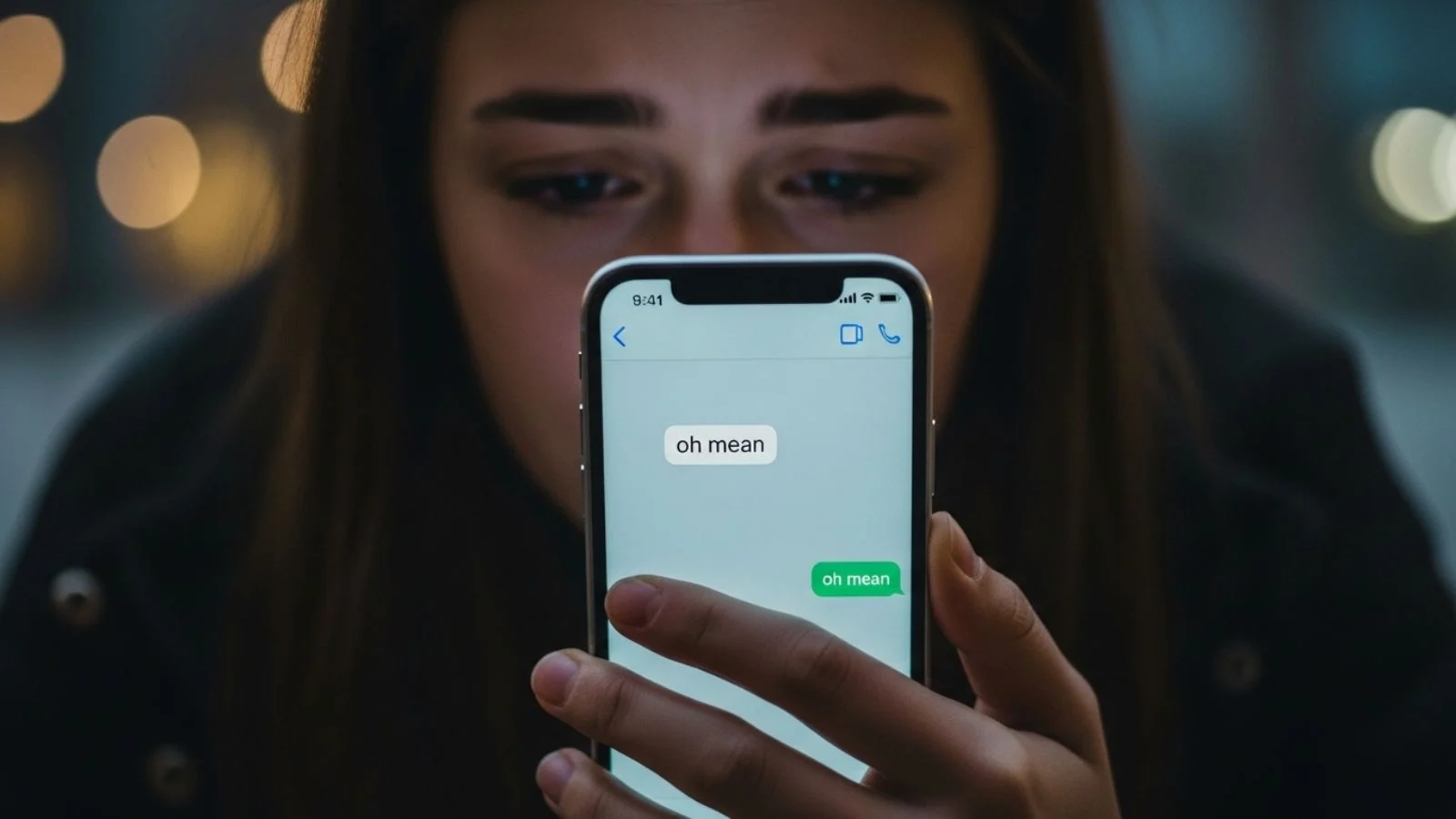
“Oh” in text simply expresses a reaction. It shows surprise, understanding, disappointment, realization, or emotion depending on context and tone. In chat, “oh” can mean anything from “I get it” to “That’s surprising” or even “I’m not impressed.”
Now let’s break down what “oh” mean in text, how people use it on different platforms, and how you should respond when someone sends it to you.
Meaning Explanation
Oh Meaning in Text
The “oh” meaning in text is a quick emotional response. It signals that someone has just processed new information.
Unlike acronyms such as “IDK,” “oh” is a real English word, not an abbreviation.
In texting, it can express:
- Surprise
- Realization
- Disappointment
- Curiosity
- Sarcasm
- Mild interest
- Emotional reaction
The tone changes everything.
What Does “Oh” Mean in Chat?
When someone types “oh” in chat, it usually means:
- “I didn’t know that.”
- “That’s interesting.”
- “I understand now.”
- “That’s disappointing.”
- “Okay…”
The emotional meaning depends entirely on punctuation and follow-up words.
Compare:
- Oh. → Possibly disappointed or unimpressed
- Oh! → Excited or surprised
- Ohhh → Realization or understanding
- Oh wow → Genuine surprise
- Oh okay → Neutral acceptance
Is “Oh” an Acronym?
No.
“OH” is not an acronym in texting.
It is:
- A natural English interjection
- A reaction word
- A conversation filler
- A tone-setting expression
It has existed for centuries in spoken language and simply adapted into digital messaging.
Oh Slang Meaning
The “oh” slang meaning depends on internet culture.
Online, it often functions as:
- A passive-aggressive reply
- A soft reaction to something awkward
- A minimalist response
- A low-effort acknowledgment
Sometimes, “oh” can even feel colder than silence.
Meaning Across Platforms
Tone shifts depending on where it’s used.
Oh Meaning on Snapchat
On Snapchat, “oh” is usually:
- A reaction to a snap
- A soft response to unexpected news
- A signal that someone is unsure what to say
Example:
A: I can’t hang out tonight.
B: Oh…
That “oh…” often means mild disappointment.
Oh Meaning on TikTok
On TikTok, “oh” appears in:
- Comments reacting to drama
- Realization moments
- Plot twists
Example comment:
“Ohhhh now I get it.”
On TikTok, stretching it (ohhh) signals understanding.
Oh Meaning on Instagram
On Instagram DMs or comments:
- It may show surprise at a photo
- It can express mild shock
- Sometimes it signals awkwardness
Example:
A: That’s my ex in the picture.
B: Oh.
That period changes the entire tone.
Oh Meaning on WhatsApp
On WhatsApp, tone matters even more because conversations are longer.
“Oh” can mean:
- “Okay, noted.”
- “That’s unexpected.”
- “I don’t know how to respond.”
Without emojis, it may feel serious.
Oh in SMS (Text Messages)
In traditional SMS:
- “Oh” often replaces full sentences
- It can signal disengagement
- Or simply acknowledgment
Short replies like “Oh.” sometimes worry people because they feel cold.
Tone & Context Variations
This is where things get interesting.
Funny Tone
A: I tried cooking and burned water.
B: Oh nooo
A: Yeah, I’m banned from the kitchen.
B: Oh wow, that’s talent.
Here, “oh” is playful.
Sarcastic Tone
A: I forgot your birthday.
B: Oh really?
A: It slipped my mind.
B: Oh wow. Amazing.
Sarcastic “oh” often pairs with dramatic punctuation.
Romantic Tone
A: I miss you.
B: Oh… that’s sweet.
A: I wish you were here.
B: Ohhh stop, you’re making me blush.
Here, “oh” softens emotion.
Angry Tone
A: I told everyone your secret.
B: Oh.
That single word can carry serious disappointment.
Playful Tone
A: Guess who just tripped in public?
B: Oh nooo, was it you?
A: Sadly, yes.
B: Oh my God, tell me everything.
15 Real Chat Examples
- A: I passed my exam.
B: Oh nice! - A: I can’t come anymore.
B: Oh… - A: That wasn’t true.
B: Oh okay. - A: He likes you.
B: Oh really? - A: I moved to Canada.
B: Oh wow. - A: That’s my sister.
B: Ohhh I see. - A: It was a joke.
B: Oh. - A: I quit my job.
B: Oh? Why? - A: I deleted the message.
B: Oh great. - A: I miss us.
B: Oh… - A: I bought the wrong tickets.
B: Oh no. - A: You were right.
B: Oh? - A: It’s tomorrow.
B: Oh shoot. - A: That’s not what happened.
B: Oh okay, explain. - A: I love you.
B: Oh my God, I love you too.
Grammar & Language Role
Part of Speech
“Oh” is an interjection.
Interjections express emotion.
Examples:
- Oh!
- Oh no
- Oh wow
Sentence Role
It can:
- Stand alone
- Start a sentence
- Replace a full emotional reaction
Example:
“Oh.” (Full response)
Sentence Position
Most common positions:
- Beginning of sentence
- As a standalone reply
- Before clarification
Example:
“Oh, I didn’t realize.”
Formal vs Informal Usage
“Oh” is:
- Informal in texting
- Acceptable in conversation
- Less common in professional emails
At work, it’s better to say:
“I understand.”
“Thank you for clarifying.”
Tone Impact
Tone depends on:
- Punctuation
- Capitalization
- Length (Oh vs Ohhh)
- Follow-up message
Small changes create big emotional differences.
How to Reply When Someone Says “Oh”
This section is important because context matters.
Funny Replies
- “That’s all I get? Just oh?”
- “Oh what? Finish the sentence!”
- “Ohhh is that surprise I hear?”
- “You sound shocked.”
Serious Replies
- “Is everything okay?”
- “What are you thinking?”
- “Did that surprise you?”
- “I can explain if needed.”
Flirty Replies
- “Oh? Did I catch your attention?”
- “That ‘oh’ sounds interesting.”
- “Ohhh, tell me more.”
- “Why do I feel like that oh means something?”
Neutral Replies
- “Yeah.”
- “Just wanted to let you know.”
- “That’s what happened.”
- “Now you know.”
Is It Rude or Bad?
Is “Oh” Rude?
Not by itself.
But it can feel rude if:
- Used alone with a period
- Sent repeatedly with no explanation
- Used during serious conversations
Is It Disrespectful?
No.
However, tone determines emotional impact.
“Oh.” during an apology may feel dismissive.
Is It a Bad Word?
No.
It’s completely safe and neutral.
Can You Use It in School?
Yes.
It’s harmless.
Can You Use It at Work?
In casual work chats, yes.
In formal emails, better avoid standalone “Oh.”
Use clearer professional language instead.
Who Uses This Term?
“OH” is used by:
- Gen Z
- Millennials
- Adults
- Teens
It’s universal.
Common regions:
- United States
- United Kingdom
- Canada
- Australia
- Global internet users
Most common platforms:
- Snapchat
- TikTok
- SMS
Everyone uses it. Tone varies by age group.
Origin & Internet Culture
“Oh” is not new slang.
It dates back centuries in English speech.
Internet culture didn’t create it — it simply:
- Shortened responses
- Amplified tone differences
- Added punctuation variation
- Encouraged minimalist replies
TikTok and meme culture popularized:
- “Oh?” (dramatic reaction)
- “Oh nooo”
- “Ohhh I see”
Fast typing culture made single-word replies common.
Comparison Table
| Term | Meaning | Formal/Informal | Tone | Popularity | Confusion Risk |
|---|---|---|---|---|---|
| oh | Reaction/realization | Informal | Depends on context | Very high | Medium |
| idk | I don’t know | Informal | Casual | Very high | Low |
| ion | I don’t | Very informal | Casual | Medium | High |
| dunno | Don’t know | Informal | Relaxed | Medium | Low |
| idc | I don’t care | Informal | Dismissive | High | Medium |
“Oh” is more emotional than informational compared to “idk” or “idc.”
Experience-Based Insight
In real conversations, “oh” often signals a pause in emotional processing.
When someone types just “Oh,” they may be:
- Thinking
- Disappointed
- Unsure what to say
- Slightly hurt
From observing real chat interactions, short reactions like “oh” create more overthinking than long messages. People often read too much into it.
The safest approach? Ask for clarification.
Frequently Asked Questions
What Does Oh Mean in Text Messages and Online Chat?
It expresses reaction. It may signal surprise, understanding, or disappointment depending on tone.
What Does Oh Mean on Snapchat and TikTok?
On Snapchat, it often shows emotional reaction.
On TikTok, it signals realization or dramatic surprise.
Is Oh Rude, Disrespectful, or Harmless Slang?
It is harmless. It only feels rude if tone suggests dismissal.
How Should You Reply When Someone Says “Oh”?
Ask for clarification if unsure. Match their tone. Keep it light unless the topic is serious.
Is Oh the Same as IDK or Different?
Different.
“Oh” shows emotion.
“IDK” shows lack of knowledge.
Can You Use Oh in School or Work?
Yes in casual chats.
Avoid in formal professional emails.
Final Thoughts: When to Use “Oh” and When to Avoid It
“Oh” is one of the simplest yet most emotionally flexible words in digital communication.
Use it when:
- Reacting naturally
- Showing surprise
- Acknowledging new information
- Expressing mild emotion
Avoid using it alone when:
- Someone shares serious news
- You are in a formal setting
- You don’t want to sound dismissive
Common Mistakes
- Sending “Oh.” after someone apologizes
- Overusing “oh” instead of meaningful replies
- Assuming tone without clarification
Smart Usage Tip
If unsure how it sounds, add context:
“Oh, I understand now.”
“Oh wow, that’s exciting.”
This removes confusion.
In 2026 texting culture, small words carry big emotional weight. “Oh” is simple — but powerful.