If you chat online, watch British shows, or scroll social media, you may see the word “innit.”
You might wonder:
- What does innit mean in text?
- Is it rude?
- Is it slang?
- Can I use it?
In this simple guide, I will explain everything about “innit” in very easy English.
You will learn:
- The clear meaning
- Where it came from
- How people use it in real life
- Common mistakes
- Modern 2026 usage
- FAQs people ask online
Let’s start with the basic meaning.
What Does Innit Mean in Text?
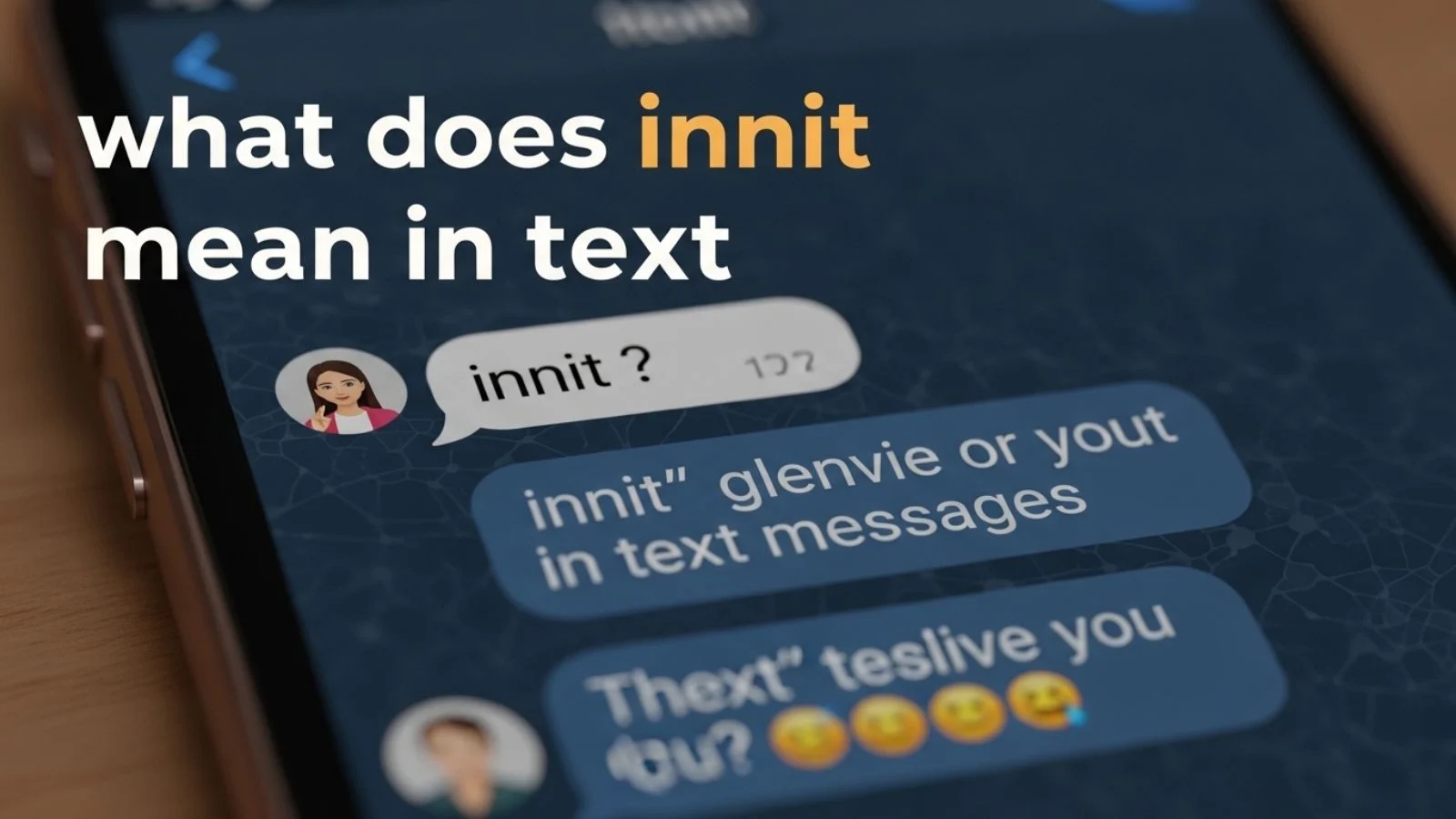
Innit is short for “isn’t it?”
It is mostly used in British English.
Simple Definition
Innit means: “right?” or “isn’t that true?”
People use it at the end of a sentence to:
- Ask for agreement
- Confirm something
- Show surprise
- Keep a conversation friendly
Very Simple Example
- “It’s hot today, innit?”
This means:
- “It’s hot today, isn’t it?”
- The speaker wants you to agree.
What Type of Word Is Innit?
“Innit” is a tag question.
A tag question is a short question added to the end of a sentence.
Examples of tag questions:
- It’s cold, isn’t it?
- You’re coming, aren’t you?
- She can drive, can’t she?
In British slang, people often use “innit” for many of these.
Even when grammar says it should be something else.
For example:
- “You’re coming, innit?”
- “We’re late, innit?”
This is not formal grammar. It is informal spoken slang.
Where Did Innit Come From? (Origin & History)
1. Short Form of “Isn’t It?”
“Innit” started as a fast way of saying:
“Isn’t it?”
When people speak quickly, words change.
“Isn’t it” → “Isn’ it” → “Innit”
Over time, the short sound became popular.
2. British Street Slang
“Innit” became very popular in:
- London
- Urban areas in the UK
- Multicultural communities
It is strongly linked to:
- British youth culture
- Street slang
- Casual speech
3. Media & Pop Culture
British TV shows and music helped spread the word.
For example:
- UK rap and grime music
- Teen dramas
- Social media influencers
By 2026, “innit” is common on:
- TikTok
- Snapchat
It is now used globally in online chat.
How Is Innit Used in Text?
“Innit” is mostly used in:
- Casual texting
- Social media comments
- Friendly chat
- Jokes
It is NOT used in:
- Formal emails
- Academic writing
- Business reports
Different Meanings Based on Tone
Even though “innit” means “isn’t it,” its feeling changes based on tone.
Here is a simple table:
| Sentence | Meaning | Feeling |
|---|---|---|
| It’s cold, innit? | Isn’t it cold? | Asking for agreement |
| That movie was good, innit? | That movie was good, right? | Friendly |
| You’re tired, innit? | You’re tired, right? | Confirming |
| Mad weather, innit? | Crazy weather, right? | Casual |
Explanation: In all cases, the speaker wants agreement or reaction.
Real-Life Examples with Simple Explanations
Example 1
Text message:
- “This food is amazing, innit?”
Meaning:
- The food is very good.
- The person wants you to agree.
Example 2
Friend chat:
- “We’re late again, innit?”
Meaning:
- We are late.
- The speaker wants confirmation.
Example 3
Online comment:
- “That plot twist was crazy, innit?”
Meaning:
- The twist was shocking.
- The writer expects agreement.
Short Dialogues Using Innit
Dialogue 1: Friends Talking
A: “It’s freezing today.”
B: “Yeah, proper cold, innit?”
Explanation:
B agrees that it is very cold.
Dialogue 2: School Chat
A: “Math test was hard.”
B: “So hard, innit?”
Explanation:
B agrees and shows shared feeling.
Dialogue 3: Social Media
Comment:
“That episode was emotional, innit?”
Explanation:
The person feels emotional and wants others to agree.
Why Do People Use Innit?
People use “innit” because it:
- Sounds casual
- Feels friendly
- Shows group identity
- Makes speech faster
- Creates connection
It often shows:
- Relaxed personality
- Youth culture
- Street style speech
Personality Traits Linked to Innit Usage
People who often say “innit” may:
- Be informal
- Like casual communication
- Enjoy slang
- Be part of British youth culture
- Speak fast in conversation
Important: Using “innit” does NOT mean someone is uneducated. It is simply informal slang.
Is Innit Grammatically Correct?
In Formal English?
No.
Formal English requires:
- It’s hot, isn’t it?
- You’re coming, aren’t you?
In Casual Speech?
Yes, it is common in casual British speech.
Many native speakers use it naturally.
It is acceptable in:
- Text messages
- Friendly chats
- Social media
But avoid it in:
- Job applications
- Essays
- Business emails
Common Mistakes & Misconceptions
Mistake 1: Thinking It Means “Is It?”
Wrong:
- “Innit” does NOT mean “is it?”
Correct:
- It means “isn’t it?” or “right?”
Mistake 2: Using It in Formal Writing
Wrong:
- “The results were successful, innit.”
Correct:
- “The results were successful, weren’t they?”
Mistake 3: Using It Everywhere
Some learners try to use it in every sentence.
Example:
- “I went to school, innit. I saw my friend, innit.”
This sounds unnatural.
Use it only when you want agreement.
Modern Usage in 2026
In 2026, “innit” is:
- Common in UK TikTok captions
- Used in memes
- Popular in reaction comments
- Seen in YouTube shorts
Example (2026 social post):
“POV: You said you’d sleep early but it’s 2am, innit?”
Explanation:
The person jokes about staying up late and wants others to relate.
Similar Words to Innit
Here are similar expressions:
- Right?
- Isn’t it?
- Don’t you think?
- Yeah?
- You know?
All of these ask for agreement.
Differences Between Innit and Right?
“Innit” and “right?” are similar but not identical.
| Innit | Right? |
|---|---|
| British slang | Global English |
| Informal | Can be semi-formal |
| Youth style | Neutral tone |
| Strong UK identity | International |
“Innit” sounds more British and street-style.
When Should You Use Innit?
You can use “innit” when:
- Chatting with friends
- Texting casually
- Writing social media captions
- Imitating British slang
Avoid it when:
- Writing an exam
- Sending a job email
- Speaking formally
- Writing academic content
Emotional Tone of Innit
“Innit” can show:
- Agreement
- Humor
- Sarcasm
- Surprise
- Annoyance
Example:
“That was clever, innit?”
Depending on tone, it can mean:
- Genuine praise
- Light sarcasm
Tone matters a lot.
Cultural Importance of Innit
“Innit” is strongly connected to:
- British identity
- London street speech
- Multicultural English
- Youth expression
It shows how language changes over time.
Language is always growing.
“Innit” is an example of natural language evolution.
How Non-Native Speakers Should Use It
If you are learning English:
- Understand it first
- Use it carefully
- Only use in informal settings
You do not need to use it to sound fluent.
Understanding it is enough.
Frequently Asked Questions
1. What does innit mean in text?
It means “isn’t it?” or “right?” It asks for agreement.
2. Is innit rude?
No. It is informal but not rude. Tone can make it sarcastic, though.
3. Is innit only British?
Mostly yes. It started in the UK and is strongly British slang.
4. Can I use innit in exams?
No. It is informal slang. Use proper grammar in exams.
5. Why do people say innit instead of isn’t it?
It is faster, easier, and part of casual speech.
6. Is innit grammatically correct?
Not in standard grammar. It is correct only in informal slang.
7. Do adults use innit?
Yes, but it is more common among young people and in casual settings.
Quick Summary Points
- Innit = Isn’t it
- Used for agreement
- British slang
- Informal only
- Popular in youth culture
- Common on social media in 2026
- Not for formal writing
Conclusion
Now you know exactly what “innit” means in text. It is a short form of “isn’t it?” used mainly in British informal speech. People use it to ask for agreement, confirm ideas, or make conversation friendly. It is common in texting, social media, and youth culture, especially in 2026 online spaces. However, it is not suitable for formal writing or professional settings. Understanding slang like “innit” helps you better understand real conversations and modern English. Keep learning everyday expressions, and soon you will feel more confident in casual English conversations too.